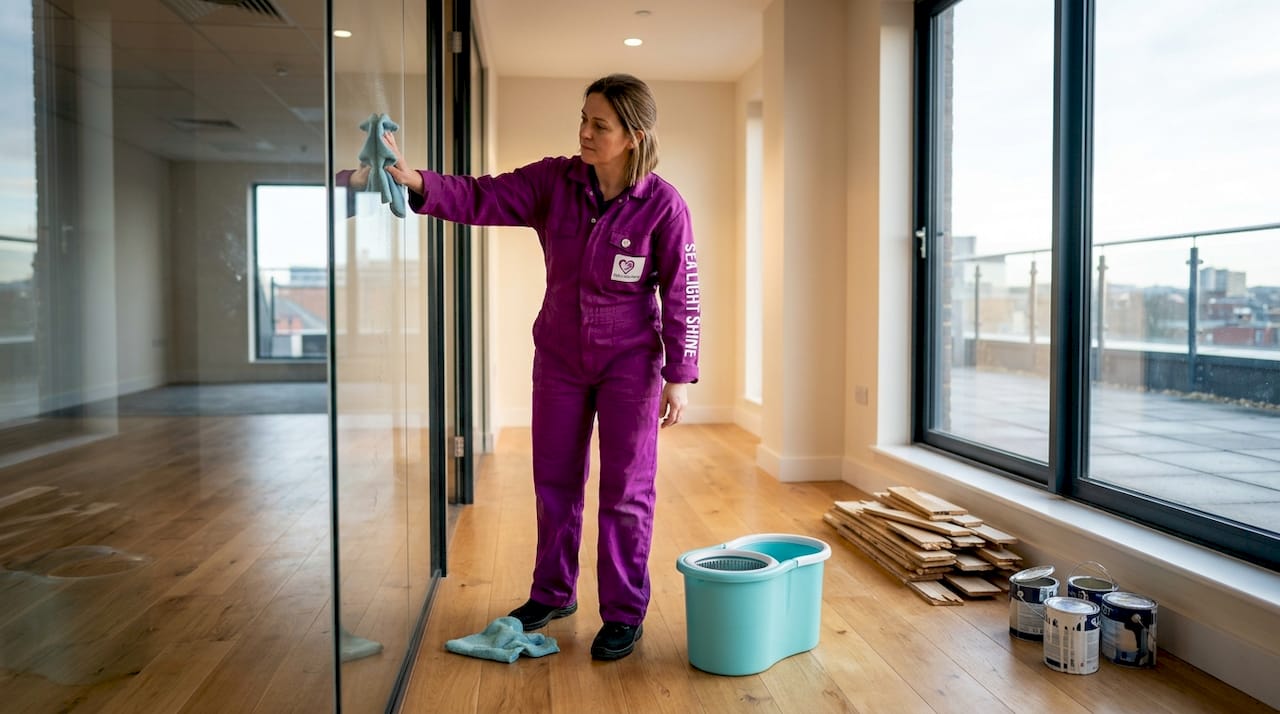
When a construction project wraps up, many property managers assume the builder will leave the site clean and ready for occupancy. That assumption is one of the most expensive mistakes in commercial property management. What is post-construction cleaning commercial? It is a specialist service covering everything from fine dust extraction and adhesive removal to fixture polishing and air vent sanitising. It is distinct from what most builders are contractually obligated to do, and understanding that distinction can save you significant time, money, and conflict before a single tenant walks through the door.
Table of Contents
- Key takeaways
- What post-construction commercial cleaning actually involves
- The three phases of a professional post-construction clean
- Contracts, responsibilities, and who actually owns the cleanup
- Choosing the right post-construction cleaning service
- Common challenges and how to address them
- My perspective on commercial post-construction cleaning
- How Sealightshine supports commercial post-construction projects
- FAQ
Key takeaways
| Point | Details |
|---|---|
| It is not the builder’s full responsibility | Construction contracts typically only require large debris removal, not detailed final cleaning. |
| Three distinct phases exist | Post-construction cleaning follows a structured sequence: rough clearance, detailed cleaning, and final polishing. |
| Specialist equipment is required | Industrial HEPA vacuums and floor scrubbers are needed to clean safely without damaging new finishes. |
| Contracts must define scope clearly | Ambiguous cleaning clauses leave sites construction-complete but not occupancy-ready. |
| Professional services protect your investment | Specialist cleaners reduce surface damage risk and meet health and safety compliance standards. |
What post-construction commercial cleaning actually involves
Post-construction cleaning in commercial settings is not an extension of your regular office cleaning routine. It is a purpose-built service designed to address the specific residues, materials, and hazards that building or renovation work leaves behind.
After construction or major renovation, a site typically contains fine silica dust on every surface, paint overspray on windows and floors, adhesive residues from flooring and fixtures, grout haze on tiled surfaces, plaster dust in air vents, and swarf or metal filings near newly installed mechanical systems. Standard commercial cleaning equipment and methods are not designed to handle any of these safely or effectively.
The typical scope of after construction cleaning in a commercial property includes:
- Deep dust removal from ceilings, walls, skirting boards, and above-ceiling voids
- Surface sanitising of all contact points including door handles, light switches, and worktops
- Detailed window cleaning to remove paint, adhesive labels, and construction film
- Floor scrubbing and polishing to remove grout, adhesive, and cement residue
- Cleaning and sanitising HVAC vents, which carry hazardous dust if left unaddressed
- Removal of paint splatter from fixtures, frames, and glass
- Exterior surface cleaning to remove residue that can fade building appearance over time
Pro Tip: Ask your post-construction cleaning provider for a written scope of works before they begin. Verbal agreements about “a full clean” rarely match what a property manager expects and what a cleaner delivers.
What separates commercial post-renovation cleaning from domestic or routine work is the scale, the materials involved, and the compliance requirements. A commercial site may span multiple floors, include sensitive flooring finishes, or require cleaning sign-off before a local authority inspection. These are not circumstances where a mop and a standard vacuum are adequate.
The three phases of a professional post-construction clean
A three-phase process is the industry standard for commercial post-construction cleaning. Each phase has a specific purpose, and skipping or compressing any one of them creates problems that show up during final inspection or after tenants move in.
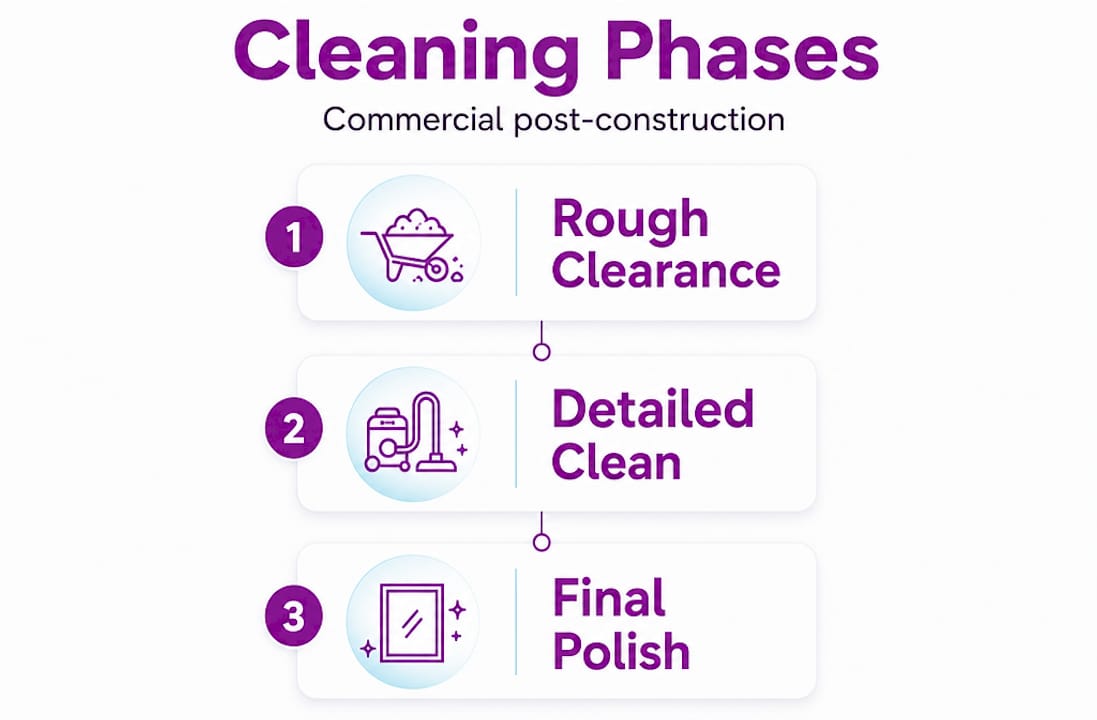
Phase one: Rough clearance
This is the initial construction site cleanup. It involves removing large debris such as off-cuts of timber, offcuts of cable, broken tile pieces, packaging materials, and leftover building products. This phase often overlaps with the builder’s own contractual obligations. Heavy-duty bags, skips, and manual labour are the primary tools here.
Phase two: Detailed dust and residue cleaning
- Wet and dry vacuuming of all surfaces, starting from the highest points and working downward to avoid recontaminating cleaned areas
- Scrubbing of hard floors using industrial floor scrubbers to lift cement, adhesive, and grout residue
- Cleaning of all glazing, both interior and exterior, using appropriate solutions that remove construction film without scratching
- Wiping down all fixtures, skirting boards, door frames, and built-in furniture
- Sanitising HVAC inlets and outlets, which accumulate fine particulate matter during construction that poses genuine health risks
This phase is where HEPA filtration vacuums and specialist cleaning agents earn their place. Standard domestic vacuums recirculate fine dust rather than capturing it, which is both ineffective and potentially hazardous.
Phase three: Final polishing and inspection
- Buffing and polishing hard floors using equipment such as industrial floor scrubbers to achieve a finished appearance
- Final inspection of all surfaces under different lighting conditions to identify missed spots, streaks, or residue
- Touch-up cleaning of any areas identified during inspection
- Removal of all cleaning materials and equipment from the site
Pro Tip: Conduct the final inspection using a torch held at a low angle to walls and floors. Raking light reveals dust and smears that overhead lighting completely misses, and it is the same technique a building control officer or a demanding client will use.
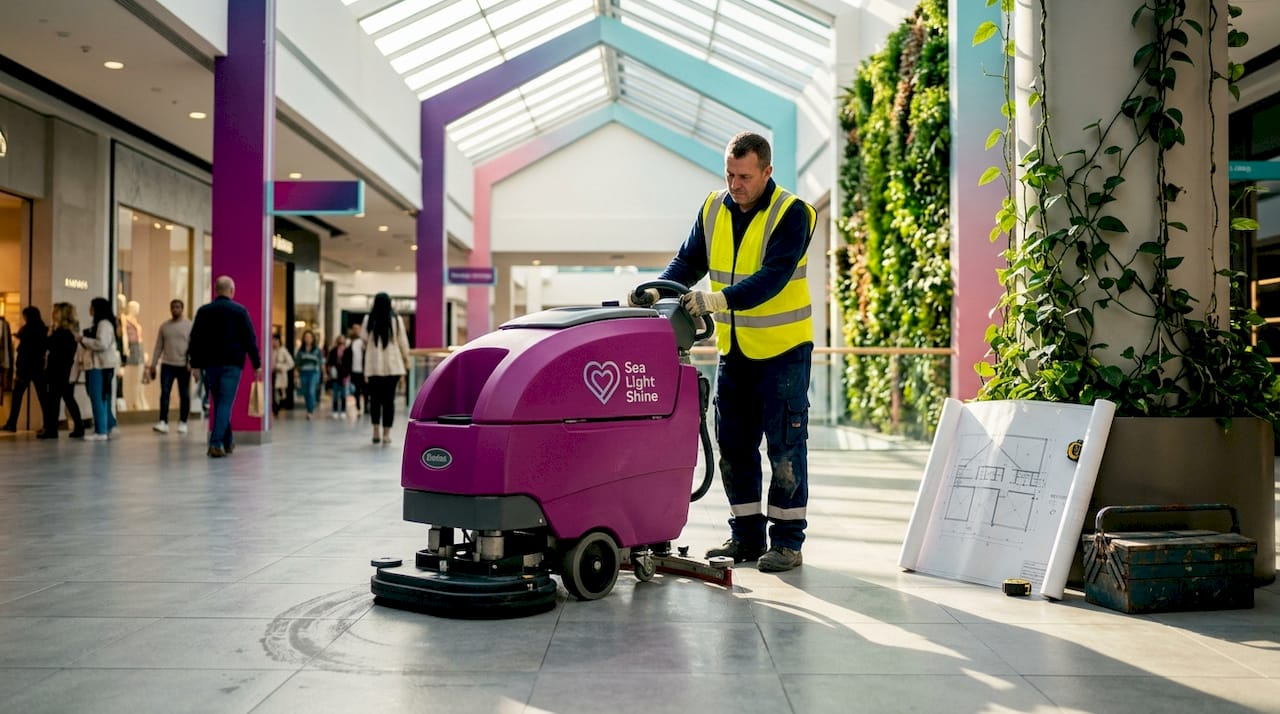
The use of industrial floor scrubbers during phase three makes a measurable difference to the finished appearance of hard floors, turning a functional clean into a presentation-ready result.
Contracts, responsibilities, and who actually owns the cleanup
This is where most disputes between property managers and contractors originate. Construction contracts often only oblige builders to clear large debris from the site. What they do not include, unless explicitly specified, is the detailed final cleaning that prepares a space for occupancy.
The result is a site that is technically construction-complete but practically unusable. Dust coats every surface. Windows are obscured. Floors are stained with adhesive and grout. From a contractor’s perspective, the job is done. From a property manager’s perspective, the space is nowhere near ready.
Key risks from unclear contracts include:
- Tenants or clients arriving to a site that is visibly unfinished in terms of cleanliness
- Disputes over which party bears the cost of specialist cleaning
- Delays to planned occupation dates while cleaning is arranged at short notice
- Damage to new finishes caused by rushed or unqualified cleaning
“Defining the scope of cleaning work clearly in contracts, separating rough debris removal from final cleaning, helps prevent gaps that can leave the site unready despite construction completion.” — Nilfisk
When you are managing a commercial project, specify cleaning responsibilities in writing at the contract stage. A practical commercial cleaning contract checklist can help you identify which tasks belong to which party and where gaps are likely to appear. Separate the rough clearance obligation from the final clean, assign both to named parties, and include quality standards and completion timelines for each.
Many property managers are surprised to discover this gap only after construction is declared complete. At that point, organising specialist cleaning at speed is both stressful and costly.
Choosing the right post-construction cleaning service
Not every commercial cleaning company is equipped to handle post-construction work. The skills, equipment, and knowledge required are specific, and selecting the wrong provider can result in damaged finishes, missed areas, and compliance failures.
When evaluating post-construction cleaning services, look for:
- Specialist experience: The company should have demonstrable experience with commercial post-construction or post-renovation cleaning, not just general office cleaning.
- Appropriate equipment: Industrial wet-dry vacuums, HEPA-filtered machines, floor scrubbers, and appropriate chemical cleaning agents are non-negotiable for this type of work.
- Public liability insurance: Any contractor working on a commercial site must carry adequate insurance. Confirm the level of cover in writing before work begins.
- References from comparable projects: Ask for examples of commercial post-construction cleaning work, ideally in similar property types.
- Flexibility on scheduling: Poor coordination between cleaning and construction schedules delays project handover and increases costs. A good cleaning partner will work around your project timeline, including evenings and weekends where necessary.
- Compliance knowledge: Your cleaning provider should understand relevant health and safety obligations and be able to document their working methods.
Pro Tip: Do not schedule your post-construction clean until all trades have finished their work. Even a single day of additional plastering or sanding after the clean resets the dust problem entirely. Coordinate with your site manager to confirm a genuine completion date before booking cleaning.
Understanding why professional cleaners deliver better results than general labour for post-construction work comes down to one thing: knowing which cleaning method is safe for which surface. Using the wrong chemical on a new resin floor or the wrong technique on brushed aluminium can cause permanent damage that costs far more to rectify than the cleaning itself.
Common challenges and how to address them
Even well-planned post-construction cleans encounter difficulties. Knowing what to expect helps you plan around the most common ones.
| Challenge | Why it happens | Practical solution |
|---|---|---|
| Fine dust in vents and ducts | Construction disturbs particulate matter that settles in HVAC systems | Specialist duct cleaning or HEPA vacuuming of inlets and outlets during phase two |
| Damage to sensitive finishes | Incorrect cleaning agents or abrasive methods | Use specialist cleaners who can identify the correct method per surface type |
| Waste disposal compliance | Large volumes of debris require licensed disposal | Confirm your cleaner holds appropriate waste carrier registration |
| Deadline pressure | Tenants or clients expect immediate access post-construction | Build cleaning time into the project programme from the outset, not as an afterthought |
| Multi-trade coordination | Cleaning cannot begin until all trades have finished | Appoint a single point of contact to confirm site readiness before cleaning commences |
Soft washing for exterior surfaces is a notable example of matching method to material. High-pressure washing on newly rendered or painted exteriors causes damage that is expensive to repair. Low-pressure washing with controlled detergents achieves the same result without the risk.
My perspective on commercial post-construction cleaning
I have seen more than a few commercial handovers go badly wrong, and in almost every case, the root cause was the same. Nobody had clearly agreed on what “clean” meant before construction started.
The builders delivered what their contract required, which was often no more than removing skips and sweeping the main floor. The property manager expected a move-in-ready space. The gap between those two positions is where cost overruns and deadline delays are born.
What I have learned is that the final clean is consistently undervalued in project budgets. It gets treated as a minor line item when it is actually the step that determines whether the space looks finished or just structurally complete. A tenant’s first impression of a new space is formed entirely by what they see when they walk in. Dust on the windowsills and adhesive on the floors signals that standards are not high, regardless of how good the construction work actually was.
My advice is to treat post-construction cleaning as a project phase, not an afterthought. Budget for it properly. Contract it separately. Choose a specialist. And build it into the programme with enough time to do it properly. The cost of getting it right is always lower than the cost of getting it wrong.
— Kate
How Sealightshine supports commercial post-construction projects

Sealightshine was built specifically to address the gap between unreliable service and the consistent, high-quality cleaning that commercial properties actually need. Our team brings the specialist equipment, trained staff, and attention to detail that post-construction cleaning demands, whether you are managing an office fit-out, a retail refurbishment, or a large-scale commercial renovation in East Anglia.
From thorough post-construction deep cleaning to systematic commercial cleaning services tailored to your handover timeline, we work around your project schedule and deliver results you can walk a client through with confidence. We also offer specialist floor cleaning for the final polishing phase, ensuring hard floors look exactly as the architect intended. Get in touch with Sealightshine to discuss your project requirements and receive a tailored cleaning plan.
FAQ
What does commercial post-construction cleaning include?
Commercial post-construction cleaning covers large debris removal, detailed dust extraction, surface sanitising, window cleaning, floor scrubbing and polishing, and HVAC vent cleaning. It prepares the site for safe occupancy and is more intensive than standard commercial cleaning.
Is post-construction cleaning the builder’s responsibility?
Builders are typically only contractually required to remove large debris from the site. The detailed final clean needed for occupancy readiness is usually the property manager’s responsibility and requires a separate specialist cleaning contract.
How long does a commercial post-construction clean take?
Timescales vary significantly by site size and condition. A small office fit-out might take one to two days, while a multi-floor commercial build can require a week or more across all three cleaning phases.
What equipment is used in post-construction cleaning?
Specialist post-construction cleaning relies on industrial HEPA-filtered vacuum cleaners, wet-dry vacuums, floor scrubbers, and appropriate chemical agents matched to each surface type. Standard domestic or office cleaning equipment is not sufficient for construction residues.
How much does commercial post-construction cleaning cost?
The cost of post-construction cleaning varies based on the site’s square footage, the number of cleaning phases required, the condition of the site, and the region. Obtaining a detailed, itemised quote from a specialist provider is the most reliable way to budget accurately for your project.