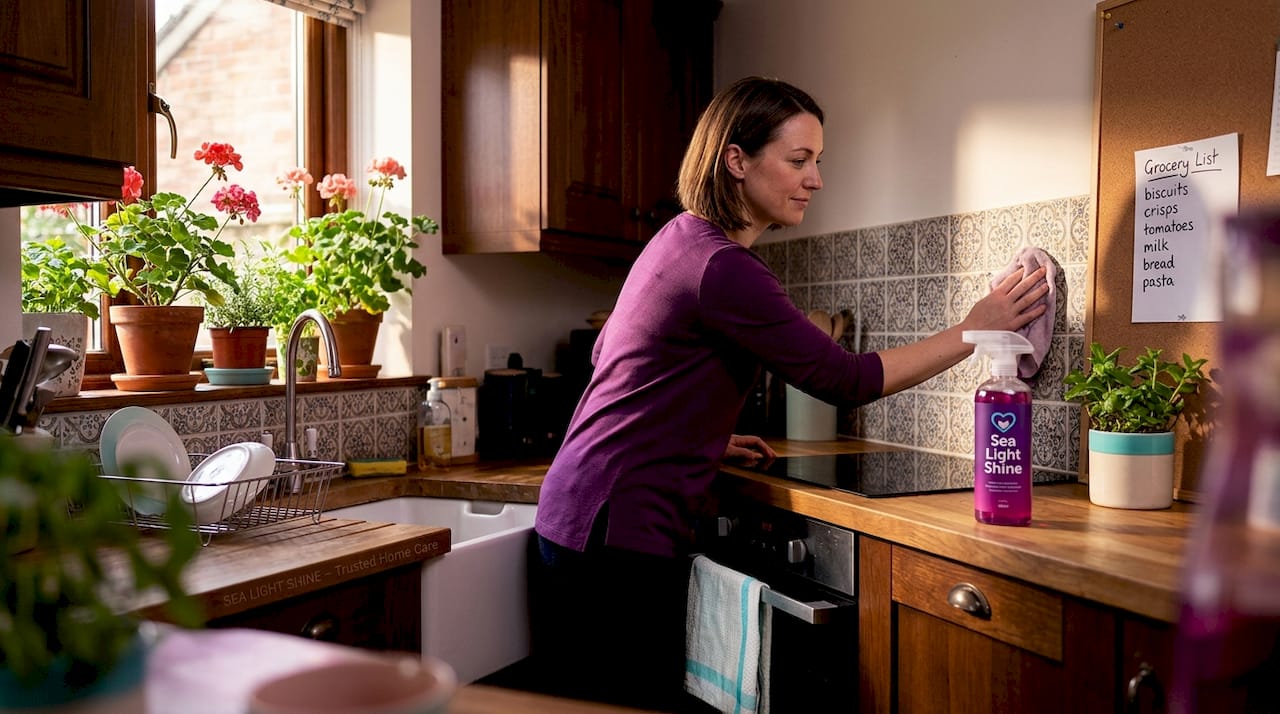
Most homeowners wipe down the worktops, mop the floor, and consider the kitchen clean. The reality is that routine cleaning addresses perhaps 30% of the hygiene risks in a typical kitchen. The rest, the grease behind the cooker, the bacteria colonising the sink drain, the mould forming inside the dishwasher filter, quietly accumulates between sessions. Understanding why kitchens need regular deep clean goes beyond aesthetics. For homeowners and property managers across East Anglia, it is a matter of food safety, appliance longevity, and the kind of hygiene that protects both residents and property value.
Table of Contents
- Understanding deep cleaning and its importance
- The hygiene risks hidden in kitchen hotspots
- The timing and frequency of regular deep cleaning
- The economic and health benefits of regular deep cleans
- Practical advice and expert tips for scheduling and hiring deep cleaning
- Why treating your kitchen as a hygiene system changes everything
- Professional kitchen deep cleaning services in East Anglia
- Frequently asked questions
Key Takeaways
| Point | Details |
|---|---|
| Deep cleaning reset | Regular deep cleaning resets kitchen hygiene by removing grease and grime routine cleans miss. |
| Quarterly schedule | Perform deep kitchen cleans approximately every three to four months for best results. |
| Hidden hotspots | Focus on sinks, drains, dishwasher, appliance interiors, and cabinets to target germs and build-up. |
| Health and savings | Deep cleaning reduces foodborne illness risk and prolongs appliance lifespan, saving money long-term. |
| Professional help | Hiring experts ensures thorough, efficient deep cleans essential for busy homeowners and property managers. |
Understanding deep cleaning and its importance
Routine cleaning and deep cleaning are not the same task done to different degrees. They are fundamentally different activities with different goals, tools, and outcomes. Routine cleaning maintains surface appearance. Deep cleaning resets the hygiene baseline of the entire kitchen.
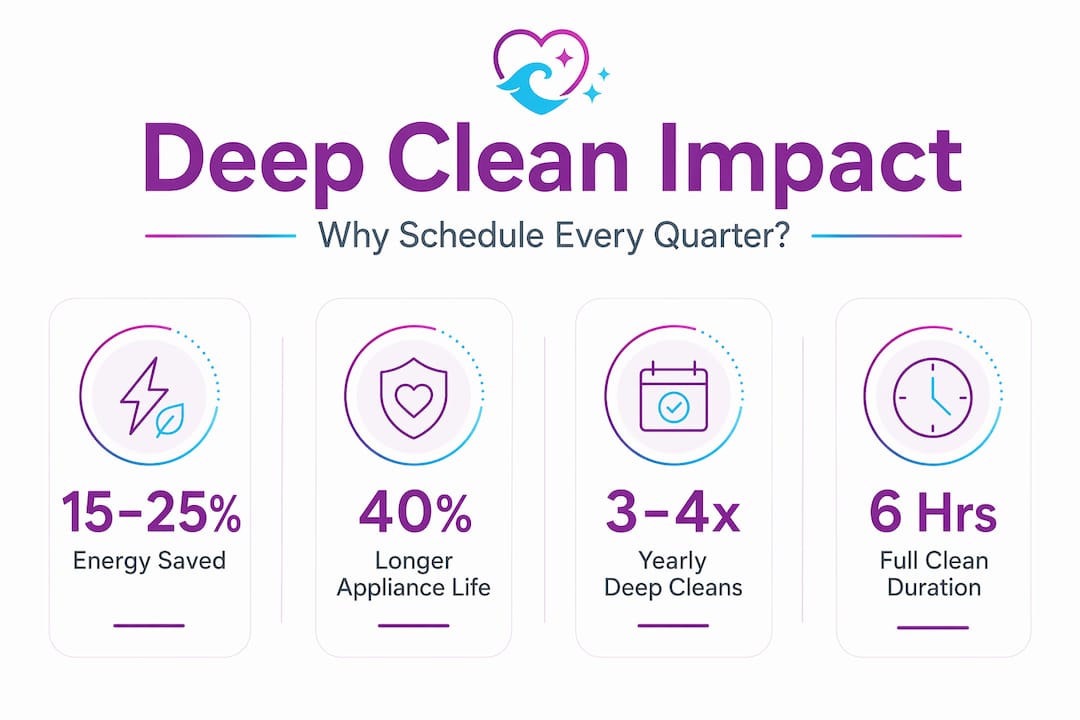
A standard daily or weekly clean might take 15 to 30 minutes: wiping surfaces, washing up, sweeping the floor. A proper kitchen deep clean, by contrast, typically takes 4 to 6 hours and should happen quarterly according to food hygiene guidance. That time difference reflects the scope involved, not just the effort.
Deep cleaning involves removing portable items and cleaning behind and under appliances, inside cupboards, and within appliance interiors. It is the kind of work that requires you to pull the fridge away from the wall, empty every cabinet, and use specialist degreasers on surfaces that ordinary spray cleaners cannot touch.
Key areas targeted during a kitchen deep clean:
- Cabinet interiors and the undersides of shelves
- Behind and beneath the fridge, cooker, and dishwasher
- Extractor fan filters and hood interiors
- Oven racks, door seals, and interior walls
- Sink basin, overflow, and drain trap
- Dishwasher filter, spray arms, and door seal
- Tile grout and splashback surfaces
- Skirting boards and floor edges
The tools matter too. Specialist degreasers, enzyme-based drain cleaners, and steam equipment break down the kind of grease and biofilm that standard multi-surface sprays leave untouched. Understanding the differences between deep and regular cleaning helps you plan your cleaning schedule with realistic expectations rather than false confidence.
| Feature | Routine cleaning | Deep cleaning |
|---|---|---|
| Frequency | Daily or weekly | Every 3 to 4 months |
| Time required | 15 to 30 minutes | 4 to 6 hours |
| Areas covered | Visible surfaces | Hidden zones, appliance interiors, behind units |
| Products used | General sprays and cloths | Specialist degreasers, enzyme cleaners, steam |
| Goal | Maintain appearance | Reset hygiene baseline |
Pro Tip: Before starting a deep clean, remove everything from worktops and cabinet shelves first. Cleaning around objects is the most common reason deep cleans fail to reach the areas that matter most.
The hygiene risks hidden in kitchen hotspots
The kitchen is the room in your home most likely to harbour harmful bacteria, and the areas most at risk are rarely the ones you clean most often. Research consistently shows that consumer cleaning habits in the kitchen leave significant hygiene gaps, particularly around food preparation surfaces and drainage areas.
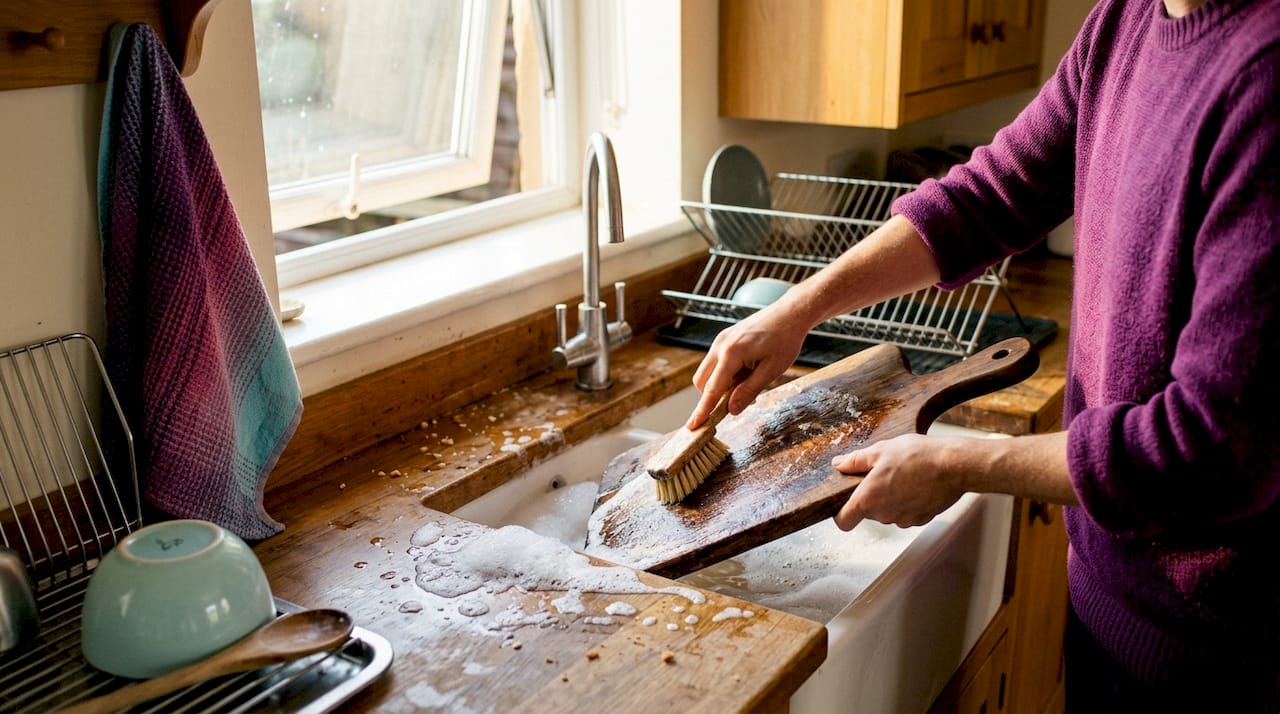
Consider chopping boards. Only 20% of chopping boards used for raw meat, fish, or poultry are washed with detergent during meal preparation, and 14% saw no washing at all within 45 minutes. That is not a minor oversight. It is a direct pathway for cross-contamination and foodborne illness in the home.
Beyond the chopping board, hidden germ hotspots such as the sink, drain, and dishwasher are commonly missed and accumulate bacteria at levels that routine cleaning cannot address. The sink drain alone can carry more bacteria per square centimetre than a toilet seat, yet it rarely receives the focused attention it needs.
Commonly neglected hotspots in home kitchens:
- Sink drain and overflow hole
- Dishwasher filter and door seal
- Fridge door seals and vegetable drawers
- Bin lid and surrounding floor area
- Handles on the oven, fridge, and microwave
- The underside of the kitchen tap
- Grease traps in extractor fans
Why do these areas get missed? Clutter, tiredness, and the simple fact that they are out of sight. When a surface is not visible, it rarely registers as a cleaning priority. That psychological blind spot is exactly what makes quarterly deep cleaning so valuable: it forces a systematic approach that routine habits never deliver.
“The areas of the kitchen most associated with foodborne illness risk are not the ones most homeowners focus on. Drains, appliance seals, and food contact surfaces require deliberate, scheduled attention beyond daily wiping.”
For homeowners and landlords in East Anglia, understanding the kitchen hygiene risks in Ipswich homes is the first step towards building a cleaning routine that actually protects the people using the space.
The timing and frequency of regular deep cleaning
Knowing that deep cleaning matters is one thing. Knowing when and how often to do it is what turns intention into practice. The guidance here is clear and consistent across food hygiene and home maintenance sources.
Full kitchen deep cleans should occur quarterly, lasting 4 to 6 hours, with routine weekly maintenance taking 60 to 90 minutes. Quarterly means every three to four months, which works out to four sessions per year. For most households, that is a manageable commitment when planned in advance.
Deep cleaning every 3 to 4 months helps prevent excessive dirt and grease build-up in cabinets and storage areas, which becomes progressively harder to remove the longer it is left. Grease that has been baking onto an oven interior for 12 months requires far more effort and stronger chemicals than grease that has been there for three.
Factors that influence how often you should deep clean:
- Household size. A family of five cooking daily generates far more grease and food residue than a single occupant cooking occasionally.
- Cooking frequency and style. High-heat frying and roasting produce significantly more airborne grease than salad preparation or light cooking.
- Property type. Rental properties and Airbnb accommodations in East Anglia often require more frequent deep cleans due to higher turnover and varying occupant habits.
- Presence of pets. Pet hair and dander accumulate rapidly in kitchen ventilation and on surfaces.
- Previous cleaning history. A kitchen that has never been deep cleaned will need an initial intensive session before a quarterly schedule becomes effective.
Statistic: A kitchen cleaned only with routine surface methods accumulates grease and microbial load at a rate that makes quarterly deep cleaning not just advisable but necessary for maintaining food-safe conditions.
For property managers overseeing multiple tenancies across Norfolk, Suffolk, or Cambridgeshire, recommended deep cleaning schedules built into tenancy agreements protect both the property and the occupants.
The economic and health benefits of regular deep cleans
The case for regular kitchen deep cleaning is not just about hygiene. There is a compelling financial argument too, one that matters particularly to property managers and homeowners who want to protect their investment.
Deep cleaning can reduce energy consumption by 15 to 25% and extend appliance lifespan by up to 40%. A fridge working harder because its coils are coated in dust and grease uses more electricity every single day. An oven with a heavily soiled interior takes longer to reach temperature. These are not theoretical savings; they show up on energy bills and in the reduced frequency of appliance replacement.
Removing bacteria from cutting boards, sinks, and appliance seals reduces foodborne illness risks and pest attraction. Cockroaches, mice, and fruit flies are drawn to the residues that accumulate in neglected kitchens. A deep-cleaned kitchen is a significantly less hospitable environment for pests, which means fewer pest control call-outs and lower associated costs.
The wider benefits of regular deep cleaning:
- Appliance longevity. Clean ovens, fridges, and dishwashers operate more efficiently and last longer.
- Lower energy bills. Appliances free of grease and scale use less power to do the same job.
- Reduced illness risk. Systematic removal of bacteria from food contact surfaces cuts the risk of gastroenteritis and food poisoning.
- Easier routine maintenance. A deep-cleaned kitchen is dramatically easier to keep clean between sessions. Grease does not bond to clean surfaces the way it bonds to existing grease.
- Better property presentation. For landlords and Airbnb hosts, a visibly and genuinely clean kitchen commands better reviews, higher rents, and faster lettings.
“A kitchen that receives regular deep cleaning costs less to maintain, presents better to tenants and guests, and poses significantly lower health risks than one maintained by surface cleaning alone.”
The benefits of professional deep cleaning extend beyond what any checklist can fully capture. The cumulative effect of consistent, thorough cleaning is a kitchen that genuinely functions better in every measurable way.
Pro Tip: After a professional deep clean, photograph the condition of appliance interiors, cabinet bases, and the area behind the cooker. This gives you a hygiene baseline to maintain and is invaluable documentation for property managers at the start of a tenancy.
Practical advice and expert tips for scheduling and hiring deep cleaning
Knowing the importance of deep cleaning is not the same as executing it well. The sequence in which you clean matters as much as the products you use.
Deep cleans should follow a sequence from cleaner upper zones to greasier lower areas to avoid recontamination. Start with ceiling cobwebs and extractor fans, work through wall tiles and cabinet fronts, then address worktops, appliance exteriors, and finally floors. Cleaning the floor first and then scrubbing the extractor fan deposits grease directly onto surfaces you have already cleaned.
Planned recurring deep cleans prevent grease accumulation and make cleaning easier over time, which is crucial for property managers handling multiple kitchens across a portfolio. A kitchen deep cleaned every quarter never reaches the state where a single session requires an entire day.
Practical steps for effective deep cleaning:
- Break the task into sections across two days if needed: appliances on day one, surfaces and storage on day two.
- Soak oven racks and dishwasher filters overnight to reduce scrubbing time significantly.
- Use a dedicated drain cleaner on sink and dishwasher drains at the start of the session so it works while you clean elsewhere.
- Label and photograph cabinet contents before emptying to make restocking faster.
- Ventilate the kitchen throughout: open windows and run the extractor fan to manage fumes from degreasers.
For homeowners and property managers in East Anglia who want reliable results without the time investment, planning kitchen deep cleans with a professional service ensures the work is done systematically, thoroughly, and on a schedule that fits around your property commitments.
Pro Tip: When hiring a professional cleaning team, ask specifically whether they clean behind appliances, inside oven doors, and within dishwasher filters. These three areas separate a genuine deep clean from an extended surface clean.
Why treating your kitchen as a hygiene system changes everything
Most people think of cleaning a kitchen as cleaning a room. Wipe the surfaces, mop the floor, and it is done. That framing is why so many kitchens remain genuinely unhygienic despite being cleaned regularly. The kitchen is not a room; it is a system. Grease migrates from the hob to the extractor fan to the wall tiles. Bacteria travel from the sink drain to the chopping board via splashing water. Mould spores from the dishwasher seal spread to stored food containers. These are not isolated problems. They are connected processes.
When you shift from thinking “I need to clean the kitchen” to “I need to maintain a hygiene system,” your entire approach changes. You start thinking in sequences rather than tasks. You recognise that cleaning the hob without cleaning the extractor fan above it is incomplete. You understand that sanitising the sink means nothing if the drain trap is left untouched.
Property managers see the biggest wins by treating kitchens as a hygiene system with recurring deep cleans targeting grease reservoirs and microbial hotspots. For a landlord managing five properties across Suffolk, that systems thinking translates directly into fewer maintenance calls, better tenant satisfaction, and stronger end-of-tenancy condition reports.
This approach also changes how you schedule cleaning. Rather than reacting when the kitchen looks dirty, you plan proactively: quarterly deep cleans anchored to the calendar, with weekly maintenance that targets the system’s highest-risk zones. The kitchen hygiene system approach is what separates homeowners and property managers who consistently maintain high standards from those who are always catching up.
The practical implication is simple. Stop asking “when does the kitchen need cleaning?” and start asking “which part of the system needs attention this week?” That question leads to better decisions, better outcomes, and a kitchen that is genuinely safe rather than superficially tidy.
Professional kitchen deep cleaning services in East Anglia
The evidence is clear: kitchens need regular deep cleaning to stay genuinely hygienic, protect appliances, and maintain safe food preparation environments. Knowing that and finding the time and expertise to do it properly are two different challenges.
At Sea Light Shine, we provide professional deep cleaning services in Ipswich and across East Anglia, designed specifically for homeowners and property managers who want consistent, reliable results. Our teams follow a systematic cleaning sequence, use specialist products, and cover every area that routine cleaning misses. We offer flexible scheduling aligned with quarterly deep clean recommendations, and we build maintenance plans for landlords, estate agents, and Airbnb hosts managing multiple properties. Whether you need a one-off deep clean or a recurring programme, our commercial and property cleaning services and domestic cleaning services are built around your schedule. Contact Sea Light Shine to book a consultation and find out how we can keep your kitchen impeccably clean with minimal disruption to your day.
Frequently asked questions
How often should I deep clean my kitchen for the best hygiene?
Experts recommend a deep clean every 3 to 4 months to prevent grease build-up and maintain high hygiene standards. Households with heavy cooking or multiple occupants may benefit from cleaning every two to three months.
What are the main differences between regular cleaning and deep cleaning in a kitchen?
Regular cleaning focuses on surface wiping and daily maintenance, whereas deep cleaning removes built-up grease, sanitises appliance interiors, and cleans hidden grime in cabinets and behind appliances. Deep cleaning uses specialised degreasers and targets areas that routine cleaning never reaches.
Why is the sink and dishwasher often overlooked but important in kitchen deep cleans?
The sink drain and dishwasher harbour bacteria and food residue that cause odours and reduce cleaning effectiveness. Regular deep cleaning eliminates these hidden hotspots and significantly improves overall kitchen hygiene.
Can regular deep cleaning really extend the life of kitchen appliances?
Yes. Deep cleaning reduces energy use by 15 to 25% and can extend appliance lifespan by up to 40%, saving homeowners meaningful money over time through lower bills and less frequent replacement.
Should homeowners or property managers hire professionals for kitchen deep cleaning?
Hiring professionals ensures thorough, systematic cleaning of hidden areas and reduces disruption, making it a practical choice for maintaining hygiene and appliance care. Professional deep cleaning services offer the expertise and equipment to deliver results that self-cleaning rarely matches.
Recommended
- Deep House Cleaning London: The 2026 Guide to a Pristine Home – Sealightshine
- Deep Cleaning Services in Ipswich: The Complete 2026 Homeowner’s Guide – Sealightshine
- Deep Clean vs Regular Clean in Ipswich: Which Does Your Home Need? – Sealightshine
- Professional Deep Cleaning Services London: The Ultimate Restorative Guide 2026 – Sealightshine