Lettings & holiday lets
Deep Cleaning in North Essex: What It Covers and How to Scope It
By SeaLight Shine12 min read
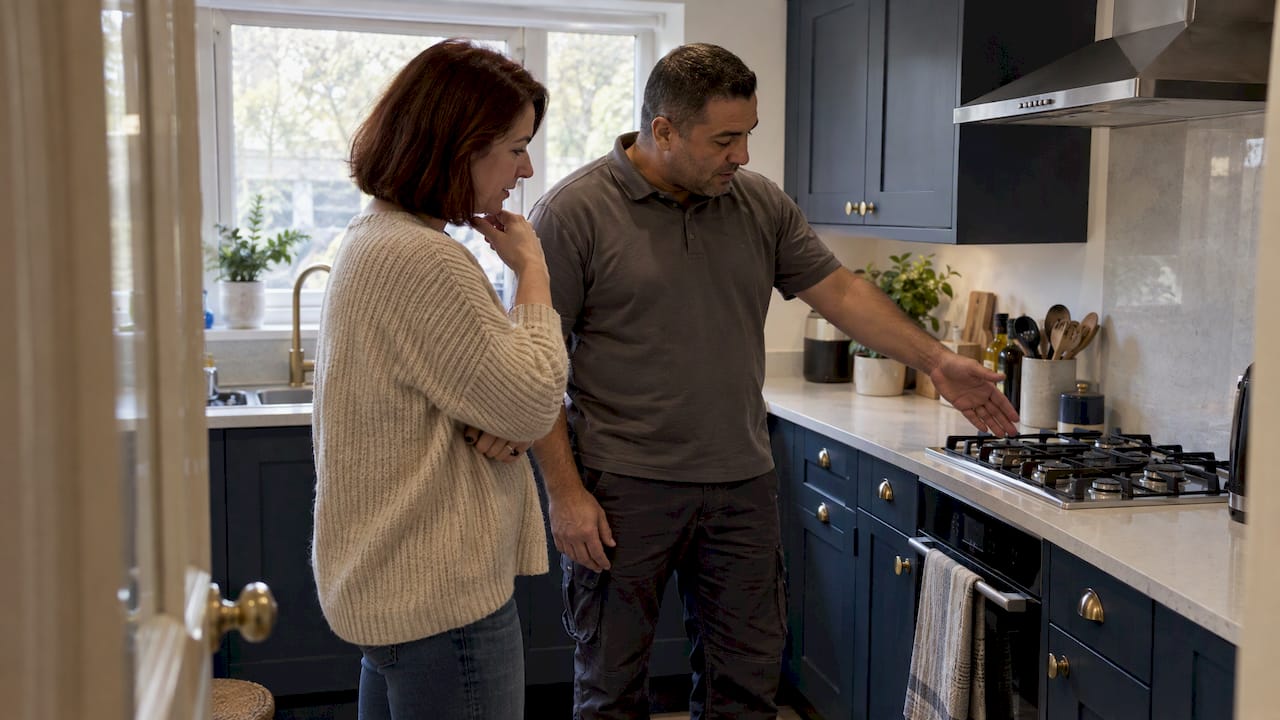
A deep clean in North Essex works best when the job is scoped to your property before anyone arrives: which rooms, which surfaces, which appliances, how long, and what “finished” looks like. That is how we approach it at SeaLight Shine. We plan the work with you first, then book it, so the deep clean matches the property in front of us and not a generic template. This guide explains what a deep clean includes, when it is worth booking, and how to set the scope for a home, a rental, a holiday let or a workplace in Colchester, Braintree, Halstead, Manningtree and the villages around them.
TL;DR
- A deep clean tackles built-up dirt that routine cleaning skips: oven interiors, limescale, grout, skirting boards, behind and under furniture, inside cupboards.
- It is a one-off reset, usually followed by a lighter regular clean, or a turnover clean for landlords and holiday let owners.
- The price depends on property size, condition and scope, which is why a written scope matters more than a headline rate.
- Agree the checklist, the access arrangements, the cancellation terms and the re-clean policy in writing before the date is set.
- Our deep cleaning service covers Ipswich, Suffolk and Essex, and starts with a scoping conversation.
What a deep clean actually is
A regular clean keeps a property tidy: surfaces wiped, floors vacuumed and mopped, bathrooms and kitchen refreshed. A deep clean goes after what accumulates between those visits. Grease behind the hob, limescale around taps and shower screens, dust on top of wardrobes and on ceiling fans, grime in grout lines, marks on skirting boards and door frames.
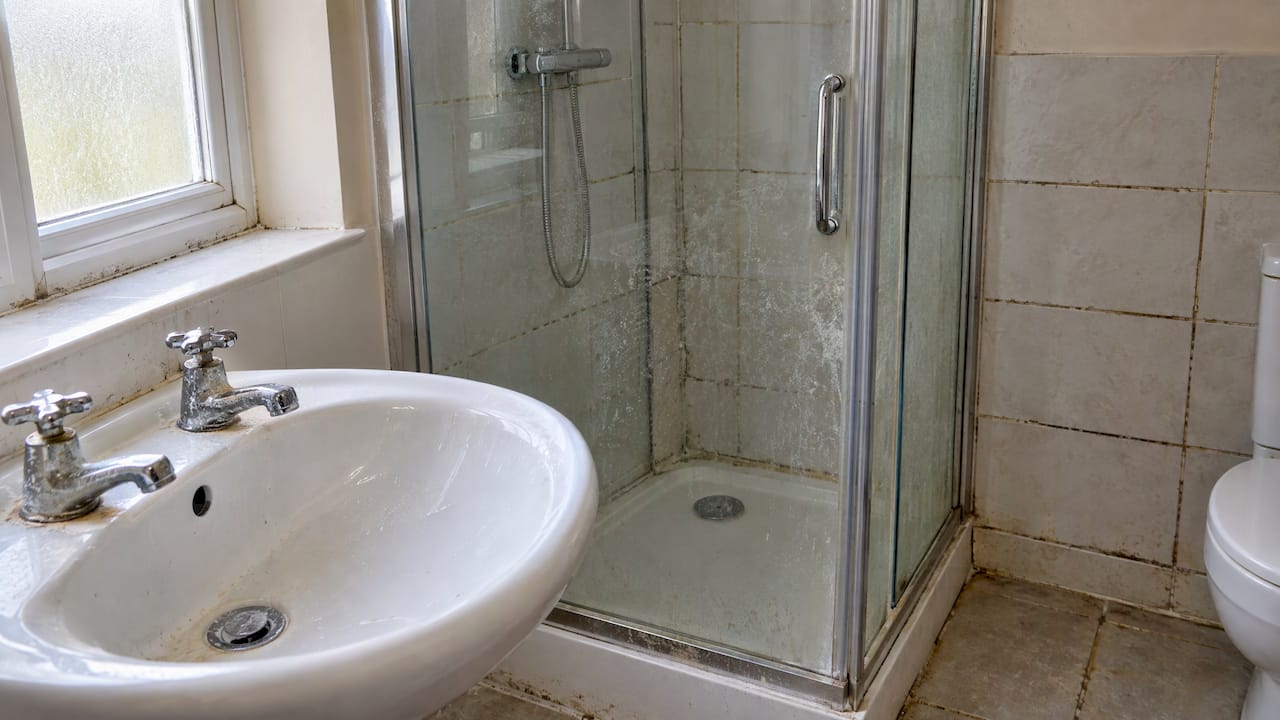
The difference is mostly one of time, method and reach. A deep clean takes several times longer than a routine visit for the same property because every area is treated, not just the visible ones. It typically means moving furniture to clean beneath it, working inside cupboards and appliances, and using descalers and degreasers where a standard clean would just wipe.
If you want the longer comparison for a home, we have written it up in deep clean or regular clean: which does your home need.
What a deep clean usually includes
No two properties need exactly the same list, but most domestic deep cleans are built from the same room-by-room tasks.
Kitchen
The kitchen is where most of the extra hours go. Typical tasks:
- Oven interior, racks and door glass degreased
- Hob, extractor and filters cleaned
- Microwave inside and out
- Fridge and freezer emptied, shelves and seals wiped
- Cupboard fronts, handles and the insides of cupboards
- Tiles, splashbacks and sink, with limescale removed from taps
- Skirting boards and the floor edges where dirt gathers
Bathrooms
- Limescale removed from taps, shower heads, screens and tiles
- Grout lines scrubbed
- Toilet cleaned thoroughly, including behind the base and under the rim
- Extractor fan covers, mirrors and fittings
- Floors cleaned right to the edges
Living areas and bedrooms
- Dusting from high to low: ceiling fans, light fittings, tops of wardrobes and shelves
- Skirting boards, door frames, doors, switches and handles
- Window sills and frames, and the glass you can reach safely from inside
- Vacuuming of upholstery and curtains where suitable
- Moving light furniture to clean beneath and behind it
- Floors vacuumed and cleaned, with carpets treated separately where needed
Carpets and hard floors are a good example of why scoping matters. A deep clean may include a thorough vacuum and floor wash, while a proper carpet treatment is a separate task. Settle which you want at the start. We offer carpet and floor cleaning alongside deep cleans so the two can be planned together.
When a deep clean is worth paying for
People often ask whether a deep clean is worth the money. The honest answer is that it earns its place at specific moments, and those are easy to recognise:
- You are moving in or out. A new home is cleaner to start in when the previous occupants’ grime is gone, and a deep clean before you leave helps the property show well.
- The regular clean has slipped. After a busy few months, an illness, a renovation or a long gap, a deep clean resets the baseline so ordinary cleaning can keep up again.
- You are starting a regular service. A first deep clean means every later visit begins from a clean standard.
- You are preparing for guests, a sale or a letting. Kitchens and bathrooms are what viewers and guests notice first.
- Seasonal resets. Many households book one in spring, and another before Christmas when family and friends visit.
- You cannot reach or do the work yourself. High shelves, heavy appliances and hours of scrubbing are not everyone’s idea of a weekend.
Deep clean, end of tenancy clean or changeover?
These are related but different jobs, and mixing them up leads to disappointment.
| Type of clean | Who it suits | What it is built around |
|---|---|---|
| Regular clean | Homeowners, offices | Keeping a property at a steady standard on a fixed schedule |
| Deep clean | Homeowners, landlords, businesses | A thorough one-off reset of the whole property, including hidden and built-up areas |
| End of tenancy clean | Tenants, landlords, agents | Leaving an empty property to the standard the tenancy agreement and inventory expect |
| Holiday let changeover | Holiday let owners | A fast, repeatable clean between guests so the property is ready for the next arrival |
A landlord handing a property to new tenants usually wants the end of tenancy clean, because it is checked against the inventory and a deposit may depend on it. A holiday let owner wants holiday let cleaning, built around changeover times. A deep clean is the right choice when the property is lived in, or about to be, and needs a proper reset.
How to scope a deep clean before you book
Scoping is where a deep clean succeeds or fails. Most disappointments come from one side assuming the oven was included and the other assuming it was not. Work through these points, whoever you hire.
1. Walk through the property
List every room and note its condition honestly: a kitchen with years of grease needs more time than one cleaned monthly. Note the number of bedrooms and bathrooms, the type of flooring, and anything unusual such as a conservatory, a utility room, a loft room, pets, or a recent renovation.
2. Decide what is in and out
Write down the extras you want and ask whether they are included: inside the oven, inside the fridge, inside cupboards, interior windows, blinds, curtains, upholstery, carpets, balcony or patio. Anything left vague at this stage becomes an argument later.
3. Agree access and keys
Will you be home, or will the cleaners need a key or alarm code? Ask how keys and codes are stored and who has access to them. For rentals and holiday lets, a clear arrangement with the agent or guests avoids missed appointments.
4. Fix the time and the team
A deep clean may take a full day or be split across visits, depending on the property. Ask how many cleaners will attend and how long they expect to be there, so the quote reflects real hours of work.
5. Get it in writing
A written quote against a written checklist is the most protective thing you can have. Cash-only deals with no written quote, vague wording on scope and a price far below everyone else’s are the warning signs most consumer guides point to, for example in this UK cleaning service checklist, which also suggests checking insurance, cancellation terms, key handling and what happens if something is missed.
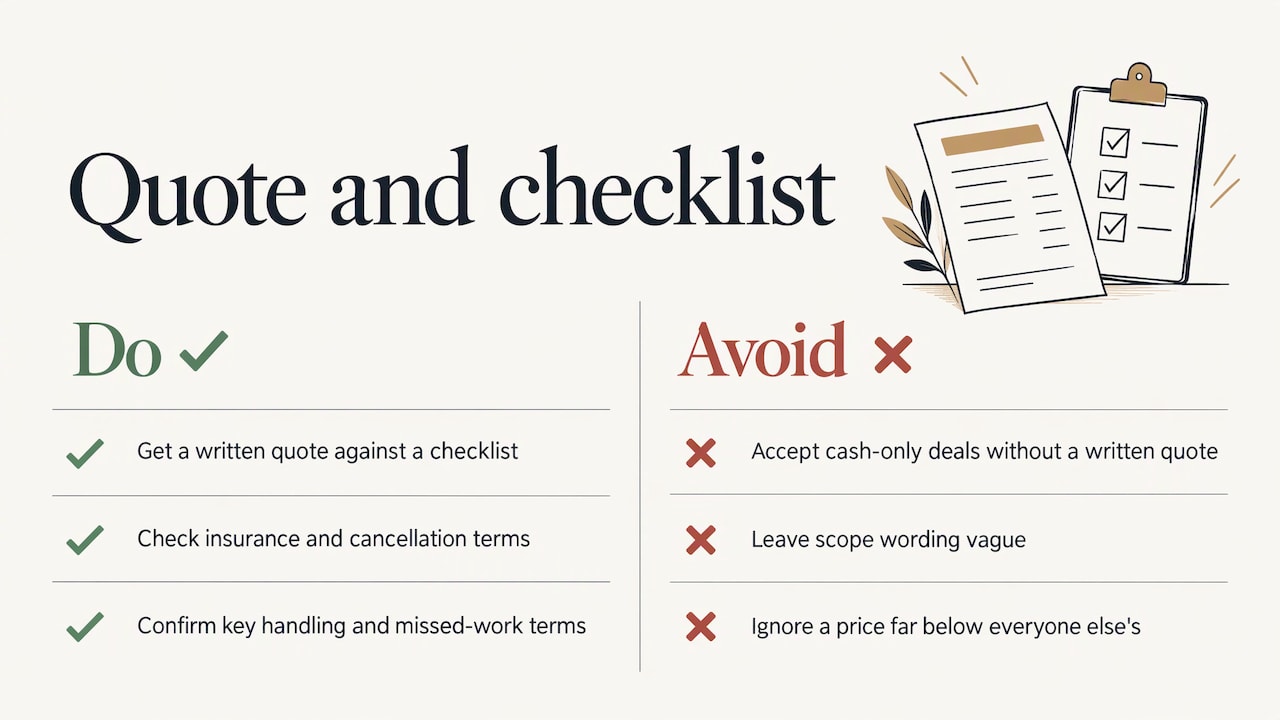
6. Ask about insurance and what happens if something is missed
Ask for proof of public liability insurance. If the business employs staff, employers’ liability insurance is a legal requirement for most employers. Also ask what the process is if an area is missed, and how soon you must report it.
How we scope it
The scoping step is the heart of how we work. Before booking, we agree with you the scope, the frequency if the clean is to become regular, and your individual needs, so the plan is tailored to your property. A three-bedroom family house in Colchester with a busy kitchen, a flat above a shop in Halstead and a holiday cottage near the Stour estuary each get a different plan, because the properties and the people are different.
What affects the price
We do not publish a fixed deep cleaning price, because the honest figure depends on the property. The factors that move any deep clean quote are:
- Size: the number of bedrooms, bathrooms and living spaces.
- Condition: a property cleaned regularly is quicker than one that has not had a deep clean for years.
- Scope: ovens, fridges, windows, carpets and upholstery each add time.
- Access: furnished or empty, parking, stairs, and whether the cleaners can work uninterrupted.
- Timing: short-notice jobs and busy periods such as before Christmas, or around tenancy changeovers in summer, can affect availability.
- Add-ons: carpet cleaning, post-builder dust, or specialist surfaces.
The only way to compare quotes fairly is to give every provider the same checklist. A cheaper quote that leaves out the oven and the windows is not cheaper.
Deep cleaning for rentals, holiday lets and workplaces
Landlords
Between tenancies, a deep clean can be the right first step before an end of tenancy clean or before the next tenants move in, especially if the property has been occupied for a long time. Our guide to end of tenancy cleaning checklists shows what a turnover clean should cover and what it protects.
Holiday let owners
Holiday lets in the Tendring and Colchester area are cleaned every few days during the season, so a periodic deep clean matters: mattresses, oven, grout, behind furniture and the places a changeover clean cannot reach in a few hours. Many owners book a deep clean before the season opens and one at the end.
Offices and commercial premises
For workplaces, a deep clean covers the areas daily cleaning does not: kitchen and break areas, washrooms, carpets, hard floors, desks and shared equipment, and high-touch points. Our guide to what a thorough office deep clean should include gives the task list, and our commercial cleaning and office cleaning services can combine a deep clean with a regular schedule.
The 20-minute rule: does it help here?
The 20-minute rule is a home habit: you clean for 20 focused minutes, then stop. It is a way of keeping on top of day-to-day tidying. It is useful for that, but a deep clean is a different kind of job. Hidden areas, appliance interiors and built-up limescale take hours of dedicated work, which is why people book it as a one-off.
Perspective
Most deep cleans we are asked about do not fail because the cleaners work badly. They fail because the job was never defined. One person says “deep clean” and means the whole house top to bottom, another means the kitchen and bathrooms.
That is why we scope the work before booking. We look at the property, talk through your priorities, agree the frequency if you want the clean to continue, and plan from there. A busy family home, a rental between tenants and a school classroom do not need the same plan, so we do not offer a one-size-fits-all package.
The result is a clean you can judge against something you agreed in advance. For homeowners that means no surprises on the day. For landlords and holiday let owners it means a property that is ready for the next person through the door. For businesses it means a consistent standard that carries on after the deep clean is done.
Bavorel
Booking a deep clean in North Essex
We are based in Ipswich and our Colchester and North Essex page sets out the home and office cleaning we provide in the area. A deep clean with us starts with a conversation about your property, what you want done and when, so the scope is clear before a date is booked.
If you are ready to plan yours, see our deep cleaning service and tell us about the property.

For a fuller walk-through of the process, our homeowner’s deep cleaning guide covers preparation, timing and what to expect on the day.
FAQ
How much does a deep clean cost?
The price depends on the size of the property, its condition and the scope you agree, including extras such as ovens, windows and carpets. For that reason we scope the job before quoting, so the figure matches your property. Compare any quotes against the same written checklist.
Is it worth paying for a deep clean?
It is worth it at a reset point: moving in or out, starting a regular service, before guests or a letting, or after a period when cleaning has slipped. It deals with the hidden and built-up areas that routine cleaning does not reach. After that, a lighter regular clean can maintain the result.
How long does a deep clean take?
It varies with the property and the scope. A small flat may take a few hours, while a larger family home can need a full day or more, often with more than one cleaner. We agree the expected time during scoping.
What is the 20-minute rule in cleaning?
It is a home habit where you clean for 20 focused minutes and then stop, which keeps everyday tidying manageable. It is a different thing from a deep clean, which is a longer, scoped job covering hidden areas and appliances.
Should I do a deep clean before an end of tenancy clean?
Only if the property needs it. For a long-occupied or heavily used property, a deep clean can come first, and the end of tenancy clean then brings it to the inventory standard. We can plan the two together when we scope the job.


