Cleaning is the systematic removal of dirt, grime, and harmful contaminants from your living spaces to protect your family’s health and maintain a comfortable home. Most households manage surface tidying well enough, but the gap between a clean-looking home and a genuinely hygienic one is wider than most people realise. This guide covers everything from daily habits and the best cleaning products to deep cleaning techniques and when to call in professional help. Whether you are following a cleaning schedule planner or starting from scratch, the advice here is grounded in how professional cleaners actually work.
What is the difference between regular cleaning and deep cleaning?
Regular cleaning and deep cleaning serve different purposes, and confusing the two leads to homes that look tidy but harbour hidden grime. Standard cleaning uses soap and water to remove surface dirt and dust, with heavy disinfectants reserved mainly for when illness is present to avoid unnecessary chemical use. This covers daily and weekly tasks: wiping down counters, vacuuming carpets, mopping hard floors, and clearing clutter from surfaces.
Deep cleaning goes further. It targets the areas that regular upkeep misses entirely: grout lines, baseboards, the inside of ovens, behind large appliances, and the tops of cupboards. Deep cleaning is recommended 2-3 times annually, though households with pets or young children will benefit from doing it more frequently. The difference is not just thoroughness. It is also the time investment and the tools required.
| Task | Regular cleaning | Deep cleaning |
|---|---|---|
| Frequency | Daily or weekly | 2-3 times per year |
| Areas covered | Visible surfaces, floors, sinks | Grout, appliances, baseboards, vents |
| Time required | 30-90 minutes | Several hours |
| Tools needed | Cloths, mop, vacuum | Steam cleaner, specialist products |
| DIY or professional | Usually DIY | Often benefits from professional help |
The practical question for most families is when to attempt a deep clean themselves and when to bring in a professional service. DIY deep cleaning works well for motivated households with the right tools. Professional cleaners, however, use stronger products and specialist equipment that remove grime more effectively than most off-the-shelf options. For a domestic cleaning frequency guide tailored to 2026 schedules, Sealightshine has put together a practical resource worth bookmarking.
Pro Tip: When planning a deep clean, work from top to bottom in every room. Dust and debris fall downward, so cleaning ceilings, light fittings, and shelves before tackling floors means you never clean the same surface twice.
Which cleaning products and tools give the best results?
The best cleaning products are not always the most expensive or the most heavily scented. Multipurpose cleaners such as Method All-Purpose Cleaner or Astonish Multi-Surface Spray handle the majority of household surfaces without damaging finishes. Specialised products earn their place for specific jobs: Bar Keepers Friend for limescale and rust, HG Mould Spray for bathroom mould, and dedicated oven cleaners for baked-on grease.
Tools matter as much as products. The three most effective tools in any cleaning kit are:
- Microfibre cloths: These lift and trap bacteria and dust rather than spreading them around. A good microfibre cloth outperforms paper towels on almost every surface and is reusable hundreds of times.
- Steam cleaners: Devices like the Karcher SC 3 or Polti Vaporetto use high-temperature steam to sanitise hard floors, tiles, and grout without chemical residue. They are particularly effective for households with young children or pets where chemical use is a concern.
- Melamine sponges: Often sold as Magic Erasers, these remove scuff marks, crayon, and stubborn stains from painted walls and skirting boards with water alone.
Eco-friendly cleaning is not a compromise. White vinegar, bicarbonate of soda, and castile soap handle a surprising range of tasks. Vinegar cuts through limescale on taps and showerheads. Bicarbonate of soda deodorises bins and carpets. Neither poses a risk to children or pets, and both biodegrade completely.
Pro Tip: Let cleaning products sit for 15 minutes before scrubbing. The chemical reaction does the heavy lifting, which means far less physical effort and better results on stubborn grime.
How can small daily habits reduce the need for deep cleans?
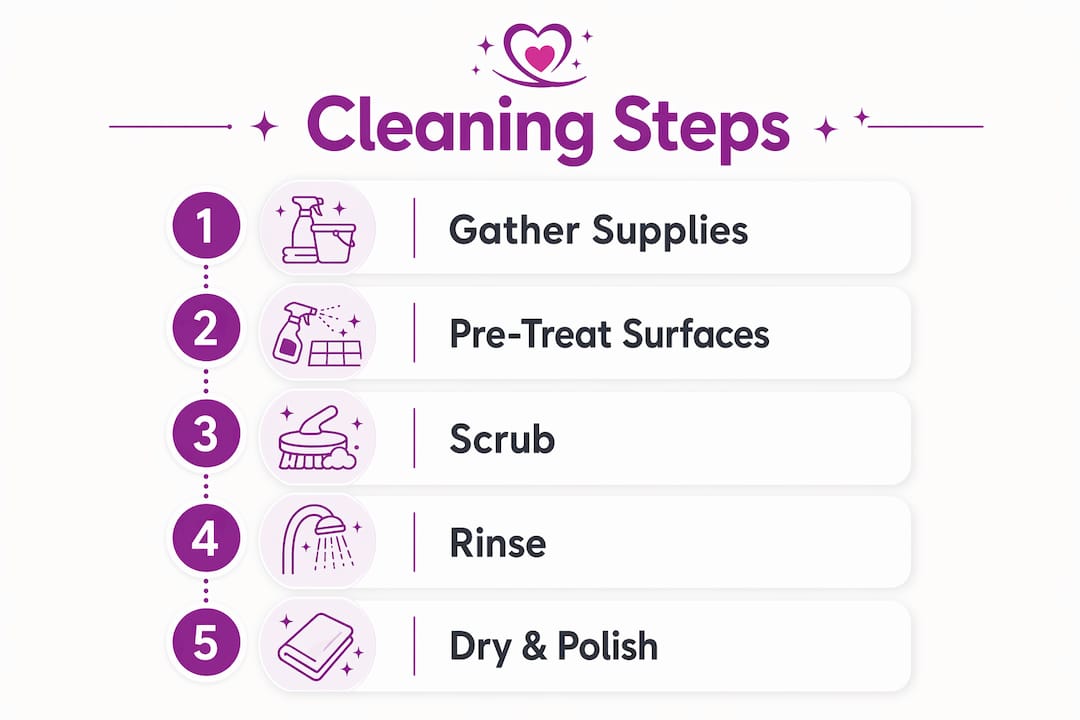
The most effective house cleaning tip is also the least glamorous: do a little every day. Small daily routines of 15-20 minutes prevent grime from building up to the point where a full deep clean becomes unavoidable. This is not about perfectionism. It is about keeping the workload manageable across the week.
A practical daily routine for most households looks like this:
- Wipe kitchen surfaces after every meal. Food residue hardens within hours and becomes far harder to remove the following day.
- Spray the shower with a daily shower spray such as Method Daily Shower Spray immediately after use. This prevents soap scum and mould from taking hold on tiles and grout.
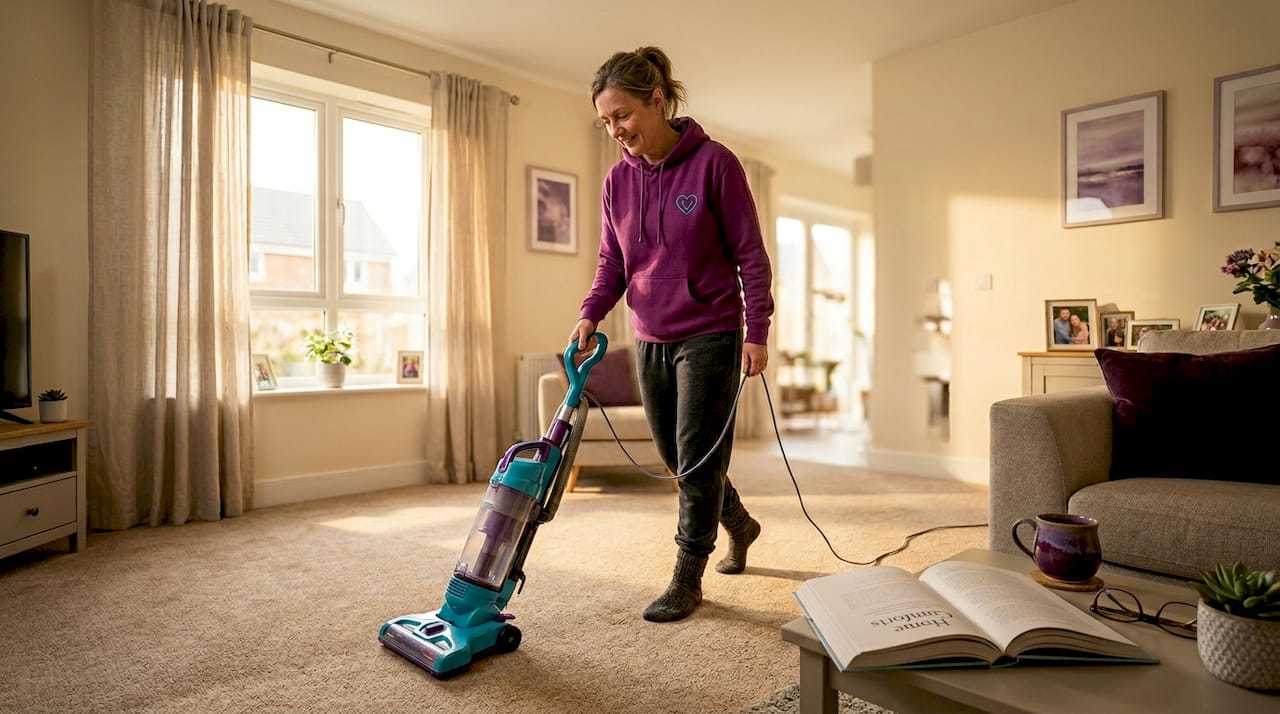
- Quick-vacuum high-traffic areas like hallways, the kitchen floor, and living room rugs. A cordless vacuum such as the Dyson V15 or Shark IZ300UK makes this a two-minute job rather than a chore.
- Wipe bathroom sinks after morning routines. Toothpaste and soap residue dry into a film that requires scrubbing if left more than a day.
- Tidy and declutter at the end of each evening. Surfaces free of clutter are faster to wipe and feel cleaner immediately.
The cumulative effect of these habits is significant. Homes that follow a consistent daily maintenance routine rarely need the kind of intensive deep clean that takes an entire weekend. The effort shifts from reactive to preventive, which is both less exhausting and more effective.
Pro Tip: Attach your cleaning routine to existing habits. Wipe the hob while waiting for the kettle to boil. Clean the sink while brushing your teeth. Habit stacking removes the mental effort of remembering to clean.
What are the best methods for cleaning kitchens and bathrooms?
Kitchens and bathrooms are the two rooms where hygiene matters most and where grime accumulates fastest. Both require a structured approach rather than a general wipe-down.
Kitchen deep cleaning techniques
A thorough kitchen clean addresses every component, not just the visible surfaces. Start with the oven, which most households neglect longest. Apply an oven cleaner such as Oven Pride or Mr Muscle Oven Cleaner, leave it overnight, then wipe clean the following morning. Rangehood filters collect grease rapidly and should be soaked in hot water with washing-up liquid monthly. Cupboard fronts, particularly around handles, accumulate a surprising amount of grease and should be wiped with a degreaser every fortnight.
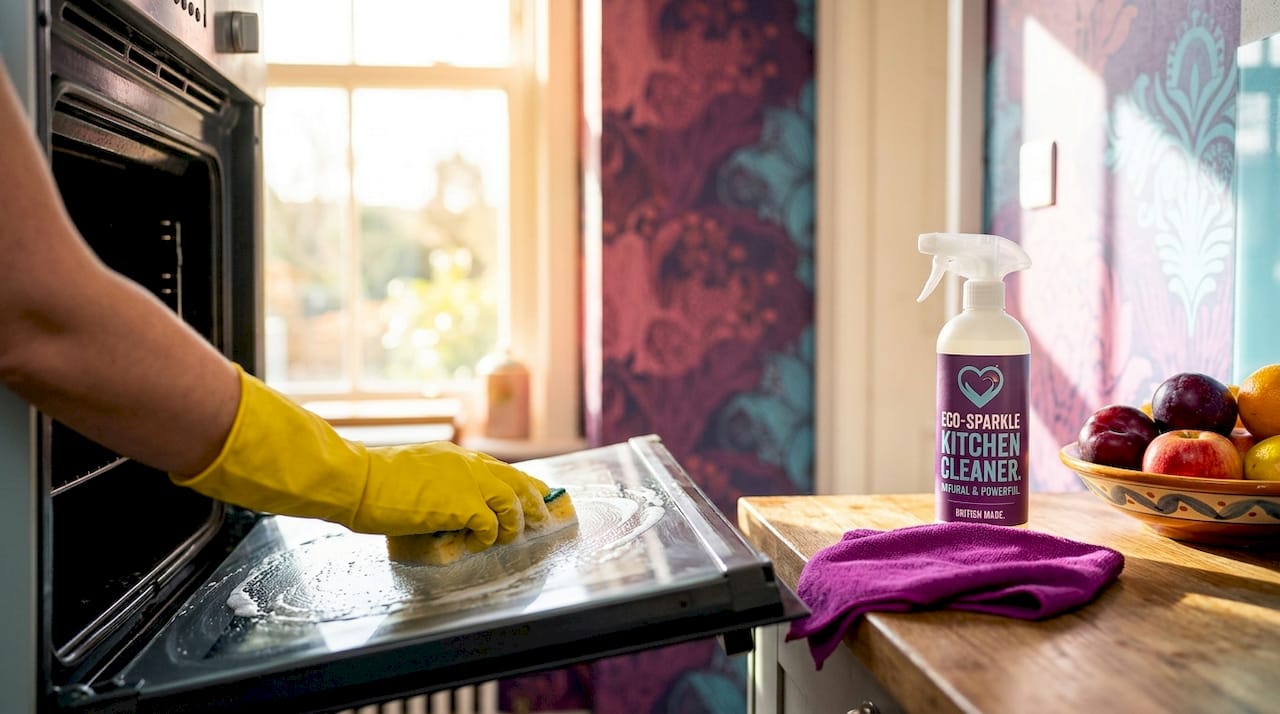
Professional kitchen deep cleaning takes 2-4 hours depending on the size and condition of the kitchen, with professionals recommending the process every 3-6 months. This timeline reflects how quickly grease and bacteria accumulate in a working kitchen, even one that appears clean on the surface. Sealightshine’s guide on why kitchens need regular deep cleaning covers the specific risks of neglecting this schedule.
Bathroom cleaning essentials
Bathrooms require disinfecting, not just surface cleaning. Thorough disinfection maintains health standards and freshness in a way that a quick wipe never achieves. The toilet bowl, seat, and base all require separate attention with a disinfectant spray. Grout between tiles harbours mould and bacteria and should be scrubbed with a stiff brush and a grout cleaner or diluted bleach solution.
| Area | Recommended product | Frequency |
|---|---|---|
| Toilet bowl | Domestos or Harpic Power Plus | Twice weekly |
| Shower grout | HG Mould Spray or diluted bleach | Monthly |
| Mirrors | White vinegar and microfibre cloth | Weekly |
| Bath and basin | Cif Cream or Astonish Bathroom Spray | Weekly |
| Extractor fan | Dry cloth or compressed air | Every 3 months |
The top-to-bottom method applies here too. Clean the extractor fan and any ceiling mould first, then work down through mirrors, tiles, basin, and toilet, finishing with the floor. Cleaning clockwise around the room reduces missed spots and the need to re-clean by over 80%, a technique professional cleaners use consistently. It sounds almost too simple, but the discipline of a fixed direction means nothing gets skipped.
Key takeaways
Effective home cleaning combines consistent daily habits with scheduled deep cleaning to maintain genuine hygiene, not just the appearance of cleanliness.
| Point | Details |
|---|---|
| Regular vs deep cleaning | Regular cleaning handles surfaces; deep cleaning targets hidden grime every 2-3 months or more often for pet owners. |
| Let products work | Leaving cleaners on surfaces for 15 minutes before scrubbing cuts effort and improves results significantly. |
| Daily habits matter most | A 15-20 minute daily routine prevents grime buildup and reduces the need for intensive deep cleans. |
| Clockwise method | Cleaning clockwise around each room reduces missed areas and the need to re-clean by over 80%. |
| Professional help is worth it | Professionals use stronger products and specialist tools that achieve results most DIY attempts cannot match. |
What I have learned from years of watching homes get cleaned
I have seen a lot of homes in East Anglia, and the pattern is consistent. The households that struggle most with cleaning are not the ones who clean least. They are the ones who clean reactively, waiting until things look bad before doing anything. By that point, the grime has set, the grout has darkened, and the oven has become a project rather than a quick job.
The shift that makes the biggest difference is treating cleaning as maintenance rather than correction. A home that gets fifteen minutes of attention every day rarely needs a full weekend rescue operation. That said, I am also realistic about what daily habits can and cannot achieve. Grout does not clean itself. Ovens accumulate baked-on residue that no amount of daily wiping prevents. There are moments in every household’s year where professional help is simply the more sensible choice, not a luxury.
Families with pets and young children face a genuinely different challenge. Pet hair, muddy footprints, and the general chaos of family life mean that the standard advice about frequency does not always apply. For these households, I would always recommend building a cleaning schedule planner that reflects actual life rather than an idealised version of it. And when the schedule slips, which it will, a professional deep clean resets the baseline without judgement.
The other thing worth saying plainly: eco-friendly cleaning works. White vinegar and bicarbonate of soda are not inferior substitutes for chemical products. For limescale, mould prevention, and general surface cleaning, they perform at the same level and cost a fraction of the price. The cleaning industry has a commercial interest in convincing you otherwise.
— Kate
How Sealightshine can take the hard work off your hands
Sealightshine was built specifically to solve the problem of unreliable, inconsistent cleaning services across East Anglia. If your home needs a thorough reset or you want to maintain a standard that daily habits alone cannot achieve, Sealightshine’s professional deep cleaning service covers everything from grout and baseboards to ovens and behind appliances. The team brings professional-grade products and equipment that are simply not available off the shelf, and every job is completed to a consistent standard. For commercial spaces, Sealightshine also provides office and commercial cleaning across Ipswich and the surrounding area. If you are a landlord, estate agent, or Airbnb host, a professional clean between tenancies or guests protects your property and your reputation.
FAQ
What is the difference between cleaning and deep cleaning?
Regular cleaning removes surface dirt and dust on a daily or weekly basis using standard products. Deep cleaning targets neglected areas like grout, baseboards, and the inside of appliances, and is recommended every 2-3 months or more frequently for households with pets or children.
How often should I deep clean my home?
Deep cleaning is recommended 2-3 times per year for most households. Families with pets, young children, or high foot traffic may need to deep clean more frequently to maintain hygiene standards.
What are the best eco-friendly cleaning products?
White vinegar, bicarbonate of soda, and castile soap handle the majority of household cleaning tasks without chemical risk to children or pets. For tougher jobs, Method and Ecover produce effective plant-based alternatives to conventional chemical cleaners.
How long does a professional kitchen deep clean take?
A professional kitchen deep clean typically takes 2-4 hours depending on size and condition, with professionals recommending the process every 3-6 months for a well-maintained kitchen.
What daily habits reduce the need for intensive cleaning?
Wiping kitchen surfaces after meals, using a daily shower spray, quick-vacuuming high-traffic areas, and tidying each evening are the four habits that most effectively delay grime buildup and reduce the frequency of full deep cleans.