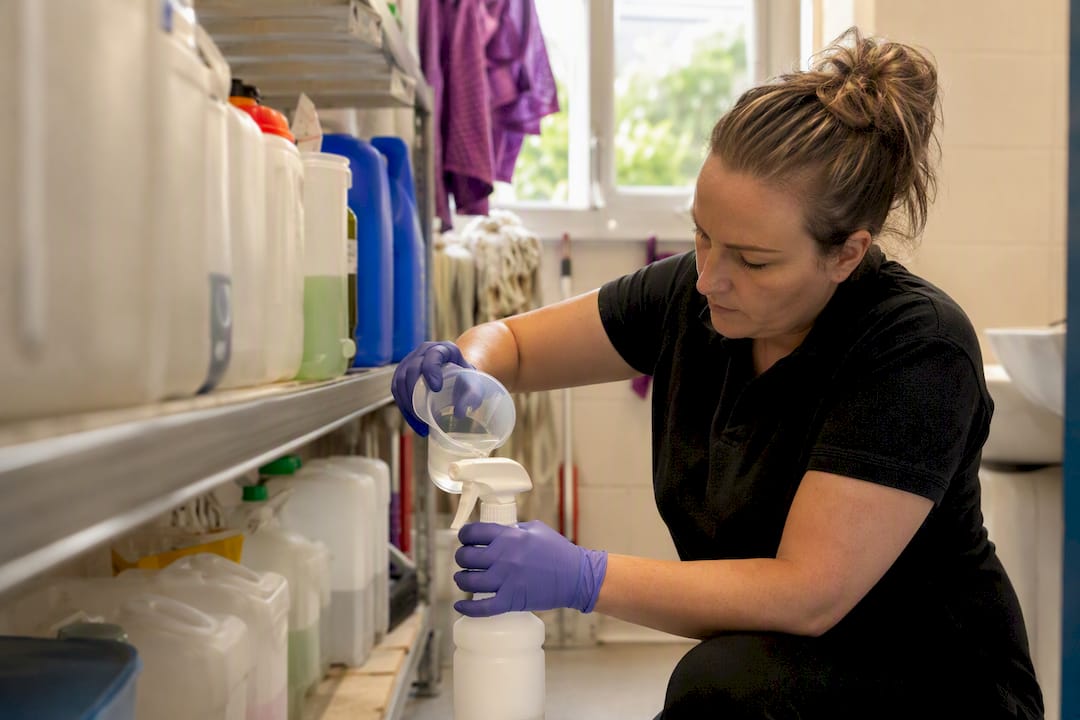
Under COSHH, every school must identify, assess, and control the risks from its cleaning chemicals. This is a legal duty under the Control of Substances Hazardous to Health Regulations 2002, enforced by the Health and Safety Executive (HSE), and it applies whether your cleaning team is in house or contracted.
Three things need doing now, not next term:
- Map every cleaning chemical on site, from classroom sprays to kitchen degreasers.
- Secure storage so nothing sits unlocked or unlabelled where pupils can reach it.
- Train everyone who handles these products, using the safety data sheet (SDS) for each one.
Find SDS documents from your supplier and check CLP hazard labels before anything goes on a shelf. Never let staff mix products, and never leave a cupboard unlocked “just for an hour.”
Key Takeaways
Schools meet their COSHH duty by identifying every hazardous cleaning substance, assessing and controlling the risk, and training staff specifically on the products they handle.
| Point | Details |
|---|---|
| Build one register | Cover the whole site, not separate lists per department, to catch high-risk items fast. |
| Never mix bleach and acids | The combination produces chlorine gas; store them apart and ventilate during use. |
| Match training to products | Use SDS-specific training with modules of around half an hour and certification validity that commonly lasts several years. |
| Review after any change | Reassess when products, staff, or procedures change, and at least annually. |
| Sealightshine builds this in | Their school cleaning teams arrive with SDS management, trained staff, and documented risk assessments already in place. |
Primary sources to consult and save
- HSE COSHH training and cleaners guidance
- Legislation
- CLEAPSS for science lab Hazcards
Table of Contents
- Identifying hazardous substances and using safety data sheets
- Carrying out COSHH risk assessments for school cleaning
- Safe storage and segregation of cleaning chemicals
- Safe handling, dilution and PPE
- Training and competence for cleaning staff and supervisors
- Managing contractors and outsourced cleaning teams
- Monitoring, review and incident response
- How Sealightshine puts COSHH into practice in schools
- Sources
Identifying hazardous substances and using safety data sheets
Most schools already have more hazardous chemicals on site than administrators realise. Beyond bleach and multi-surface sprays, science departments hold acids and solvents, kitchens use industrial degreasers and descalers, and caretaking teams often store concentrated products bought in bulk.
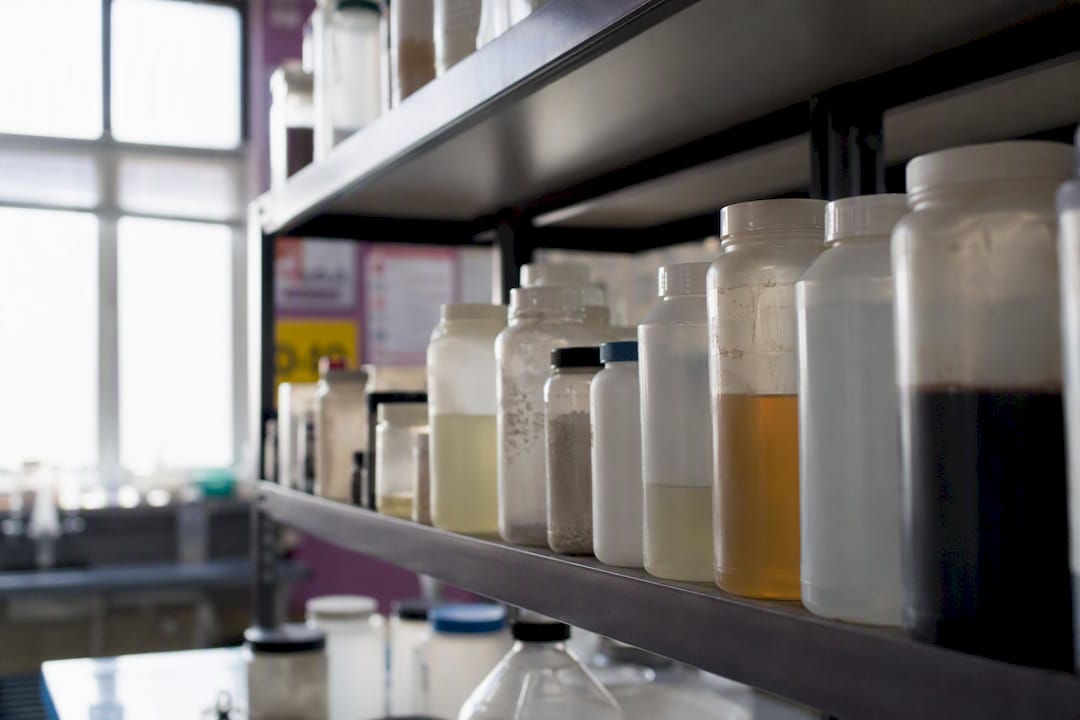
The starting point is a single chemical register covering the whole site, not separate lists per department. Industry guidance for schools recommends this approach specifically because siloed records let high-risk items slip through unnoticed.
To build yours:
- Collect the SDS for every product from the supplier or manufacturer.
- Note the CLP pictograms (corrosive, irritant, flammable) and the hazard and precautionary statements printed on the label.
- Record where each product is stored and who uses it.
- Flag any decanted bottle that isn’t labelled. Relabel it immediately or dispose of it.
Pro Tip: Photograph every SDS and pictogram on a shared staff device the day it arrives. Chasing paperwork after an incident wastes time you don’t have.
Carrying out COSHH risk assessments for school cleaning
A COSHH risk assessment doesn’t need to be complicated, but it does need to be written down and reviewed. Follow a five-step structure:
- Identify the hazardous substance and how it’s used.
- Decide who might be harmed, and how (cleaning staff, pupils, visiting contractors).
- Evaluate the risk and existing controls.
- Record findings and the actions needed.
- Set a review date.
Prioritise assessments where the risk is highest: concentrated products, science labs, kitchens, and anything used daily rather than occasionally. A quick way to triage is to ask which chemicals would cause the most harm if spilled or misused, then assess those first.
Keep completed assessments accessible to staff, ideally in the same location as the chemical register, and have your site manager or health and safety lead sign them off. For laboratory hazards specifically, cross-reference CLEAPSS Hazcards rather than writing science-specific assessments from scratch. It’s the recognised education resource for this and saves duplicating work that’s already been done properly.
Safe storage and segregation of cleaning chemicals
Storage failures are where most COSHH problems start. Keep products in their original containers wherever possible; if you must decant into a smaller bottle for daily use, label it with the product name and hazard statement straight away and log it in the register.
Lockable storage is non-negotiable in any area pupils can access. Beyond locking the door, segregation matters just as much:
- Never store bleach-based products next to acidic descalers or toilet cleaners. Mixed together, they release chlorine gas.
- Keep flammable products away from heat sources and ideally in a dedicated cabinet.
- Ensure storage areas are ventilated, not sealed cupboards with no airflow.
- Use clear signage identifying what’s stored where, and use lockable trolleys for chemicals in transit around the building.
Safe handling, dilution and PPE
Dilution ratios on the SDS exist for a reason, and guessing them is one of the easiest ways to turn a safe product into a hazardous one. Use a dedicated measuring cup or the dosing pump supplied with the product, never an estimate “by eye.”
The HSE’s guidance for cleaners is built around a handful of simple controls: avoid prolonged wet work, which drives dermatitis rates up sharply among cleaning staff, keep areas ventilated, and use good technique to limit skin contact.
Gloves matter more than most staff assume. Every glove has a “breakthrough time”, the point at which a chemical starts penetrating the material, and a general-purpose glove worn for the wrong task offers a false sense of protection. Eye protection or a respirator becomes necessary with any product carrying a corrosive or irritant warning on its label.
- Never mix bleach with acidic cleaners. The reaction produces chlorine gas.
- Keep a spill kit stocked and visible, not buried in a cupboard nobody can find in an emergency.
- Ventilate the room immediately if a spill occurs, and evacuate if fumes are strong.
Pro Tip: Store the spill kit next to the chemical cupboard, not the first aid box. Staff waste critical minutes looking in the wrong place.
Training and competence for cleaning staff and supervisors
Training has to match the actual products your staff use, not a generic overview of chemical safety. That means covering the specific hazards, dilution steps, PPE requirements, and spill response for what’s on your shelves.
COSHH training providers typically run modules of 25 to 35-plus minutes, with certification treated as valid for around three years. That’s a useful baseline, but it’s not a substitute for local induction.
- Every new starter needs a site-specific walkthrough before their first shift, covering where products are stored and how your school’s specific chemicals behave.
- Document each training session and keep records for agency and temporary staff, not just permanent employees.
- Hands-on demonstration, not just a video module, catches gaps that a certificate alone won’t reveal.
Managing contractors and outsourced cleaning teams
If cleaning is outsourced, the school doesn’t hand over its COSHH duty entirely. Ask contractors for their own risk assessments, SDS documentation, and training records before work begins, and keep copies on file.
Contractor-supplied products should be added to the school’s chemical register, not tracked separately. Build verification into the contract itself: request sample records periodically and carry out occasional on-site spot checks rather than assuming compliance.
Monitoring, review and incident response
Assessments aren’t a one-off exercise. Review them whenever a product changes, after any accident, and at least annually, with your health and safety lead signing off each update.
- Run regular spot checks: PPE availability, storage security, and ventilation.
- For spills, ventilate the area and use the spill kit immediately.
- For exposure (skin contact, inhalation, splashes), follow the SDS first-aid instructions and escalate to a first aider or emergency services if symptoms persist.
Simple routines catch weaknesses before they become incidents, and HSE guidance backs this: straightforward checks, done consistently, outperform complicated monitoring programmes that nobody has time to follow.
How Sealightshine puts COSHH into practice in schools
Sealightshine’s school cleaning teams work to a documented process: map the site’s chemicals, gather SDS for each one, build the register, run local induction, secure storage, then check it regularly. It’s the same structure this guide sets out, applied on real school sites across East Anglia.
- Staff trained specifically on the products they use, not generic modules.
- SDS and CLP labelling managed and kept current.
- Written risk assessments schools can review at any time.
Getting COSHH right in a school isn’t about paperwork for its own sake. It’s about a cleaner knowing exactly what’s under the sink, why it’s stored that way, and what to do if something goes wrong.
Why this matters, from someone who’s seen it done both ways
Schools that treat COSHH as a checklist to file away are the ones that struggle when an inspector asks a direct question. Treat it as a working system instead, and it protects staff and pupils without slowing anyone down.
— Kate
Let Sealightshine handle your school’s COSHH compliance
Getting a chemical register, SDS files, and training records in order takes time most school administrators don’t have between terms. Sealightshine is the alternative to piecing this together yourself: our school cleaning teams arrive with COSHH-compliant processes already built in, trained staff, secure storage practice, and documented risk assessments ready for your records, not created after the fact.
We work across East Anglia and can start with a site visit to review your current setup against COSHH requirements, then provide a sample chemical register and a tailored quote. Visit our school cleaning page to arrange a visit, or ask about a deep clean if end-of-term is your immediate concern.
Sources
- COSHH basics: training (HSE)
- COSHH and cleaners – key messages (HSE)
- Legislation
- COSHH for schools (COSHHmate)