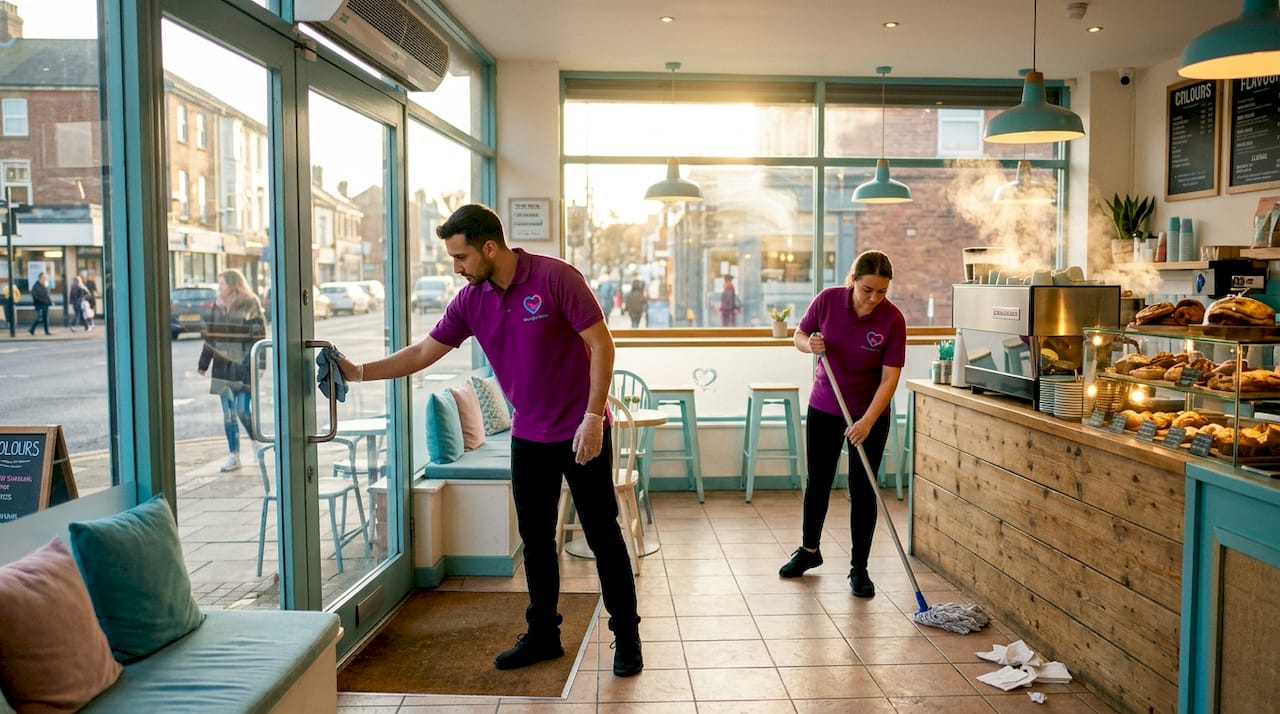
Many business owners assume a regular cleaning rota keeps their premises safe, hygienic, and compliant. It does not. Routine cleaning removes visible mess but leaves behind bacteria, allergens, and contaminants that accumulate in overlooked areas, from ventilation ducts to door handles and skirting boards. For commercial property managers and business owners across East Anglia, understanding the difference between surface tidying and genuine deep cleaning is not just a matter of appearances. It directly affects staff health, regulatory compliance, and the impression your premises makes on every client who walks through the door.
Table of Contents
- What deep cleaning means for commercial premises
- How the deep cleaning process works in business settings
- Key benefits of deep cleaning for commercial spaces
- Standards, regulations, and best practices for deep cleaning
- Choosing a deep cleaning service: what to look for
- The overlooked value of deep cleaning in modern business
- Reliable commercial deep cleaning services for East Anglia
- Frequently asked questions
Key Takeaways
| Point | Details |
|---|---|
| Deep cleaning definition | Deep cleaning targets hidden dirt and contaminants missed by routine tidying. |
| Business advantages | Regular deep cleaning protects health, ensures compliance, and boosts business reputation. |
| Regulations | Compliance with legal and sector standards is essential for safe and legitimate operations. |
| Provider selection | Choosing an experienced, certified provider ensures reliable, high-quality service. |
What deep cleaning means for commercial premises
Deep cleaning in a commercial context goes far beyond wiping surfaces and emptying bins. It involves intensive sanitising, targeted removal of built-up grime, and systematic attention to areas that standard cleaning routines never reach. Think of the grease accumulating behind kitchen equipment, the bacteria thriving in carpet fibres, or the dust compacted inside air handling units. These are not cosmetic issues. They are genuine health and safety risks.
Commercial cleaning services typically operate on two levels: routine maintenance cleaning and periodic deep cleaning. The distinction matters because each serves a different purpose. Routine cleaning keeps a space presentable day to day. Deep cleaning restores it to a genuinely hygienic standard, removing contaminants that build up over weeks and months.
Deep cleaning is often required after incidents such as flooding or pest activity, before regulatory inspections, or as part of post-tenancy restoration. It is also a legal necessity in many sectors, including food service, healthcare, and childcare. Understanding deep clean vs regular clean helps property managers plan their cleaning schedules with genuine purpose rather than guesswork.
Here is a clear comparison of the two approaches:
| Feature | Routine cleaning | Deep cleaning |
|---|---|---|
| Frequency | Daily or weekly | Every 6 to 12 months |
| Areas covered | Visible surfaces, floors, bins | All surfaces including hidden areas |
| Equipment used | Standard mops, cloths, vacuums | Industrial equipment, specialist chemicals |
| Compliance value | Limited | High, audit-ready documentation |
| Time required | 1 to 3 hours typically | Half day to full day or more |
| Contaminant removal | Surface level | Deep-seated bacteria, allergens, grease |
Key areas that only deep cleaning addresses include:
- Air ducts and ventilation systems harbouring dust and mould spores
- Behind and beneath heavy furniture and equipment
- Grouting, seals, and tile edges in washrooms and kitchens
- High-touch points such as light switches, lift buttons, and door handles
- Carpet fibres and upholstery holding allergens and bacteria
- Drainage systems and waste disposal areas prone to contamination
How the deep cleaning process works in business settings
Understanding the concept is one thing. Knowing how it actually unfolds across your premises gives you confidence that the job is being done properly. A professional deep clean follows a structured process, not a rushed once-over with stronger chemicals.
Stage one: site assessment and preparation. Before any cleaning begins, a reputable provider will assess your premises. This includes identifying high-risk zones, reviewing any COSHH (Control of Substances Hazardous to Health) requirements for chemical use, and understanding sector-specific needs. A food production facility has very different requirements from a solicitor’s office. This preparation stage protects both the cleaning team and your business.
Stage two: systematic execution. Deep cleaning proceeds in a logical sequence to prevent cross-contamination. Ceilings and high surfaces are addressed first, working downwards to floors. Fixtures, fittings, and equipment are cleaned individually. Kitchens, washrooms, and break rooms receive intensive attention. Floors are stripped, treated, and sealed where appropriate.
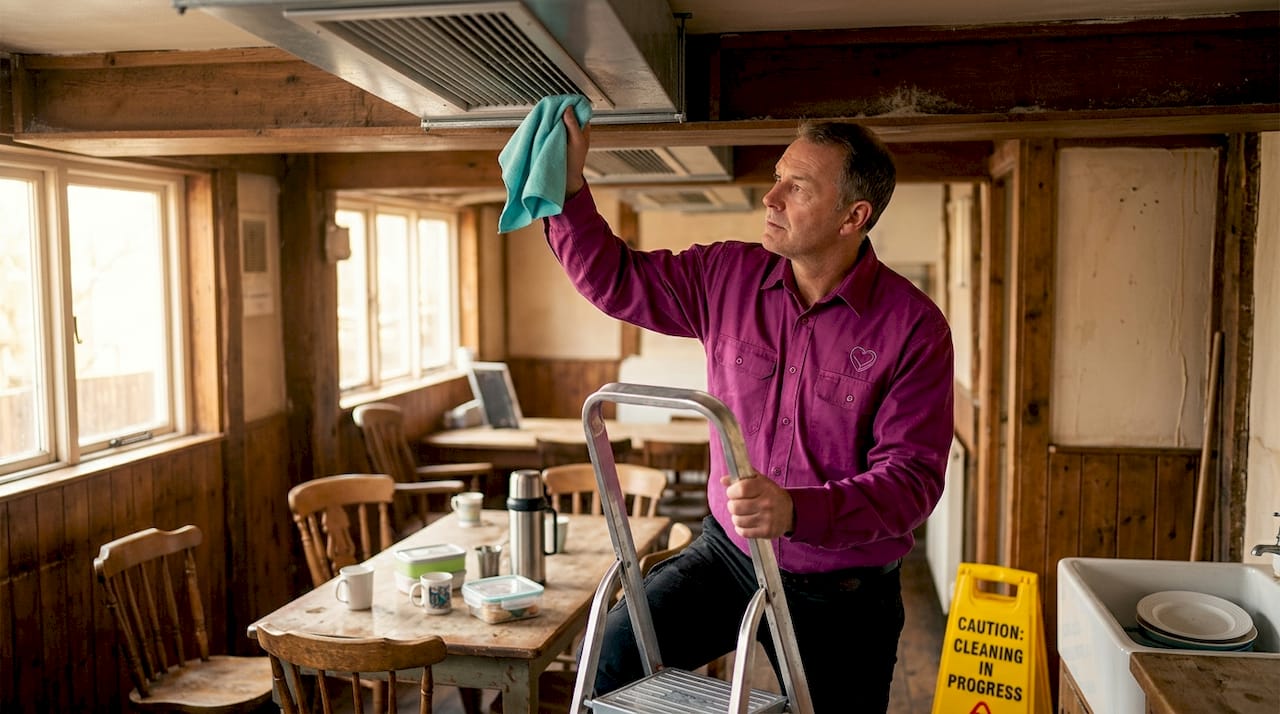
Stage three: disinfection. This is where deep cleaning separates itself entirely from routine work. Hospital-grade disinfectants are applied to high-touch surfaces, washroom fittings, and food preparation areas. In some settings, fogging or electrostatic spraying is used to reach every surface simultaneously. All chemicals used must comply with COSHH regulations and be appropriate for the specific environment.
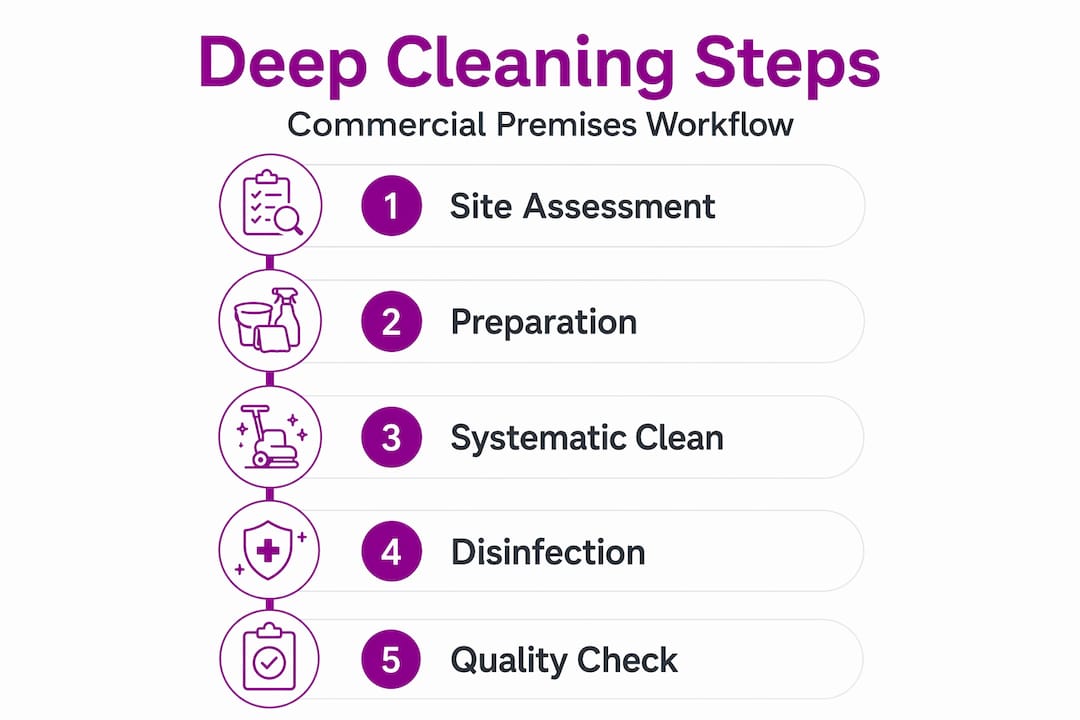
Stage four: quality assurance and documentation. A professional provider will conduct a post-clean inspection, often using ATP (adenosine triphosphate) testing to verify hygiene levels scientifically. ATP testing measures biological residue on surfaces and provides a numerical result that can be recorded and presented during audits. This documentation is invaluable if your business is subject to environmental health inspections.
Pro Tip: Ask your cleaning provider to supply written records of every deep clean, including the chemicals used, areas covered, and any ATP test results. This paperwork protects you during inspections and demonstrates a proactive approach to hygiene management.
For businesses undertaking renovation or refurbishment, post-construction cleaning is a specialist form of deep cleaning that removes construction dust, adhesive residue, and debris before the space is occupied.
Key benefits of deep cleaning for commercial spaces
The process is rigorous, but the returns are substantial. Deep cleaning delivers benefits that affect your business at every level, from the health of your staff to the confidence of your clients.
“A clean workplace is not just about appearance. It signals to staff, clients, and regulators that your business takes its responsibilities seriously.”
Improved staff health and reduced absenteeism. Bacteria and allergens in poorly cleaned environments contribute directly to respiratory illness, skin conditions, and the spread of infectious disease. Regular deep cleaning reduces the microbial load in your premises, which in turn reduces sick days. The Health and Safety Executive reports that poor workplace hygiene contributes to preventable illness across UK businesses every year.
Regulatory compliance. Many sectors face mandatory hygiene standards that routine cleaning simply cannot meet. Food businesses must comply with food safety legislation. Healthcare settings must meet infection control standards. Even standard office environments fall under HSE guidance on workplace health. Deep cleaning provides the documented evidence that your premises meet these requirements.
Enhanced business image and client confidence. First impressions are formed within seconds. A visibly clean, fresh-smelling premises signals professionalism and care. For estate agents, solicitors, financial advisers, and any client-facing business, this matters enormously. Clients notice when a space feels genuinely clean versus merely tidy.
Reduced pest risk. Food residue, grease, and organic matter in hidden areas attract pests. The benefits of regular pest control are well documented for property managers, but deep cleaning removes the conditions that attract pests in the first place, making it a critical preventative measure.
Here is a summary of the business impact across key areas:
| Benefit area | Impact | Measurable outcome |
|---|---|---|
| Staff health | Fewer sick days | Lower absenteeism rates |
| Compliance | Audit readiness | Passed inspections, no enforcement notices |
| Client perception | Professional image | Higher client retention and referrals |
| Pest prevention | Reduced infestation risk | Lower pest control costs |
| Air quality | Cleaner ventilation systems | Improved staff comfort and productivity |
For a detailed breakdown of what a thorough clean involves, the deep cleaning guide provides useful context on scope and standards. For day-to-day maintenance between deep cleans, the office cleaning checklist is a practical resource for East Anglia businesses.
Pro Tip: Schedule your deep clean before a new tenancy begins, ahead of a major client visit, or immediately following a pest incident. Timing your deep cleans strategically maximises their impact and demonstrates proactive management.
Standards, regulations, and best practices for deep cleaning
Compliance is not optional. Commercial premises across East Anglia are subject to a range of regulations that govern hygiene and cleanliness standards. Understanding these requirements helps you choose the right service and avoid costly enforcement action.
Key regulatory frameworks include:
- HSE (Health and Safety Executive) guidelines on workplace cleanliness and employee welfare
- COSHH regulations, which govern the safe use, storage, and disposal of cleaning chemicals
- Food Standards Agency requirements for food businesses, including documented cleaning schedules
- Environmental health officer standards, which set hygiene benchmarks for commercial premises subject to local authority inspection
- British Institute of Cleaning Science (BICSc) standards, which define professional cleaning practices and training requirements
- Sector-specific guidance, such as CQC (Care Quality Commission) standards for healthcare settings
Environmental health officer standards govern cleaning requirements in commercial settings and are applied during routine inspections. Failing an environmental health inspection can result in enforcement notices, fines, or in severe cases, closure of your premises.
Documentation is central to compliance. A professional deep cleaning provider should supply a written record of every visit, detailing the scope of work, chemicals used, and results of any hygiene testing. This audit trail demonstrates due diligence and protects your business if a complaint or inspection arises.
Best practice also involves reviewing your cleaning programme regularly. As your business grows, takes on new premises, or changes its operations, your cleaning requirements will change too. The commercial contract cleaning guide is an excellent resource for East Anglia businesses reviewing their cleaning arrangements and ensuring they remain compliant and cost-effective.
A useful benchmark: businesses that maintain documented cleaning records and conduct deep cleans at least twice per year are significantly better positioned during regulatory inspections than those relying solely on reactive cleaning.
Choosing a deep cleaning service: what to look for
With so much at stake, selecting the right provider requires more than a quick internet search and a price comparison. The cheapest option rarely delivers the compliance-ready, thorough service that commercial premises genuinely need.
What to assess when choosing a provider:
- Sector experience: Has the provider worked in premises similar to yours? A cleaning company experienced in food service environments understands cross-contamination risks in a way that a general domestic cleaner does not.
- Certifications and training: Look for providers whose staff hold BICSc qualifications or equivalent. Ask whether operatives are trained in COSHH compliance and safe chemical handling.
- Insurance and liability cover: Any reputable commercial cleaning provider should carry public liability insurance and employers’ liability insurance. Request proof before work begins.
- References and testimonials: Ask for references from businesses in similar sectors. A provider confident in their work will have no hesitation in supplying these.
- Sample reports and documentation: Ask to see a sample post-clean report. This tells you immediately whether the provider operates to a professional, audit-ready standard.
- Transparent pricing: Avoid providers who quote vague day rates without specifying scope. A detailed written quote protects both parties and ensures you receive exactly what you pay for.
For a broader view of what professional cleaning contractors offer, commercial cleaning contractors provides useful guidance on what to expect from a quality provider. You can also review expert commercial cleaning standards to understand the benchmarks applied across the industry.
Pro Tip: Always request a pre-clean site visit. A provider willing to assess your premises before quoting is demonstrating exactly the kind of attention to detail you want applied to the clean itself.
The overlooked value of deep cleaning in modern business
Here is something most cleaning guides will not tell you: deep cleaning is not a maintenance cost. It is a competitive advantage.
Most business owners treat deep cleaning as a reactive measure. Something is wrong, an inspection is coming, or a tenant has complained, so they book a deep clean. This approach costs more in the long run and misses the strategic value of consistent, planned deep cleaning.
We have seen this pattern repeatedly across East Anglia. A business invests in a beautiful fit-out, hires good staff, and builds a strong reputation, then neglects the environment those staff work in. Over time, air quality deteriorates, surfaces become dull and grimy despite daily cleaning, and the premises begins to feel tired. Staff morale drops. Clients notice. The business owner books an emergency deep clean and wonders why they left it so long.
The businesses that treat deep cleaning as a planned, strategic activity see measurable differences. Their staff report higher satisfaction. Their premises pass inspections without drama. Their clients comment on the quality of the environment. And when they come to renew a commercial lease or attract a new tenant, a well-maintained, documented cleaning history is a genuine asset.
Deep cleaning services that are planned and consistent cost less per visit than emergency reactive cleans, and they deliver far better long-term results. The uncomfortable truth is that neglecting deep cleaning is a false economy. The costs show up eventually, in enforcement notices, pest problems, staff illness, or a premises that simply does not reflect the quality of your business.
Reliable commercial deep cleaning services for East Anglia
If this guide has clarified what deep cleaning truly involves and why it matters, the logical next step is connecting with a provider who can deliver it to a consistently high standard.
At Sea Light Shine, we built our business around one straightforward principle: East Anglia businesses deserve a cleaning service they can actually rely on. We understand that unreliable providers and inconsistent results waste your time and put your compliance at risk. Our commercial cleaning Ipswich service is designed specifically for property managers, business owners, estate agencies, and landlords who need documented, professional results every single time. Contact us to discuss your premises, and we will provide a clear, transparent quote with no surprises.
Frequently asked questions
What does deep cleaning include for commercial premises?
Deep cleaning typically covers all surfaces, fixtures, air ducts, high-touch points, and hidden areas, removing accumulated dirt, bacteria, and contaminants far beyond what ordinary cleaning achieves.
How often should commercial premises be deep cleaned?
For most businesses, deep cleaning is recommended every six to twelve months, or following major events, illness outbreaks, pest incidents, or construction works.
Is deep cleaning necessary if we already clean regularly?
Yes. Regular cleaning maintains visible surfaces, but deep cleaning addresses hidden dirt, bacteria, and compliance requirements that routine cleans cannot reach.
What regulations must deep cleaning for businesses meet?
Deep cleaning should comply with HSE guidelines, COSHH regulations, and environmental health officer standards that govern cleaning requirements in commercial settings, alongside any sector-specific requirements relevant to your business.
How do I choose a reliable deep cleaning provider?
Select providers with proven sector experience, appropriate certifications such as BICSc qualifications, transparent pricing, documented processes, and positive references from comparable commercial clients.
Recommended
- Commercial Cleaning Contractors London: Pristine Workspaces for 2026 – Sealightshine
- Commercial Contract Cleaning Ipswich: The 2026 Business Owner’s Guide – Sealightshine
- The Ultimate Office Cleaning Checklist for Ipswich Businesses in 2026 – Sealightshine
- Professional Cleaning Services in London: The 2026 Guide to a Pristine Home & Office – Sealightshine