Keeping up with daily mess is one of those things that sounds simple but quickly unravels. Dishes pile up, surfaces gather crumbs, and before you know it, the weekend is lost to a cleaning marathon you absolutely did not plan for. The most effective ways to maintain clean home daily are not about scrubbing every corner to perfection. They are about building small, repeatable habits that take 20 to 30 minutes and prevent mess from ever taking hold. This guide gives you a realistic, room-by-room system that actually fits into normal family life.
Table of Contents
- Key takeaways
- Ways to maintain clean home daily: start with the right tools
- The daily reset: a room-by-room routine
- Building a layered cleaning schedule
- Common mistakes that derail cleaning routines
- My honest take on daily cleaning
- When to call in professional support
- Common questions
Key takeaways
| Point | Details |
|---|---|
| Daily resets beat deep cleans | A 20 to 30 minute daily reset prevents mess accumulating and removes the need for exhausting cleaning marathons. |
| Keep supplies within reach | Storing cloths and cleaners in key rooms reduces friction and makes it easier to tackle messes immediately. |
| Use a layered schedule | Combining daily, weekly, and monthly tasks spreads the workload and removes decision fatigue. |
| Time-box every session | Setting a timer and stopping when it ends keeps routines sustainable and prevents burnout. |
| Consistency beats perfection | A “clean enough” mindset maintained every day produces better long-term results than occasional thorough sessions. |
Ways to maintain clean home daily: start with the right tools
Before you can build any reliable routine, you need your cleaning supplies to be ready and waiting. If you have to rummage under the sink every time you want to wipe a surface, you will not do it. Keeping microfibre cloths and cleaners accessible in the rooms where you use them most is one of the simplest changes you can make.
Here is what a well-stocked daily kit looks like:
- Microfibre cloths (keep a small stack in kitchen and bathroom)
- All-purpose spray cleaner (ideally one bottle per floor or per high-use room)
- A small dustpan and brush near the kitchen or dining area
- Bathroom wipes or a damp cloth stored under the bathroom sink
- A laundry basket in every bedroom to stop clothes landing on chairs
For families looking to reduce chemical exposure, concentrated refillable sprays now cover most daily tasks well. Brands using plant-based formulas work just as effectively on everyday kitchen and bathroom surfaces, and a single concentrate bottle replaces several single-use products.
Pro Tip: Label two small baskets in the hallway: one for items that belong upstairs, one for items that belong downstairs. Family members can grab and go as they pass rather than leaving things on the stairs.
The logic here is simple. Reducing friction in your routine means you are far more likely to act on a mess in the moment rather than leaving it to compound. One cloth on the kitchen counter gets used. One cloth buried in a cupboard gets forgotten.
The daily reset: a room-by-room routine
The “daily reset” is what cleaning professionals call the practice of returning your home to a baseline state every single day. It is not a deep clean. It is a tidy, functional reset that takes around 20 to 30 minutes and keeps things from spiralling.
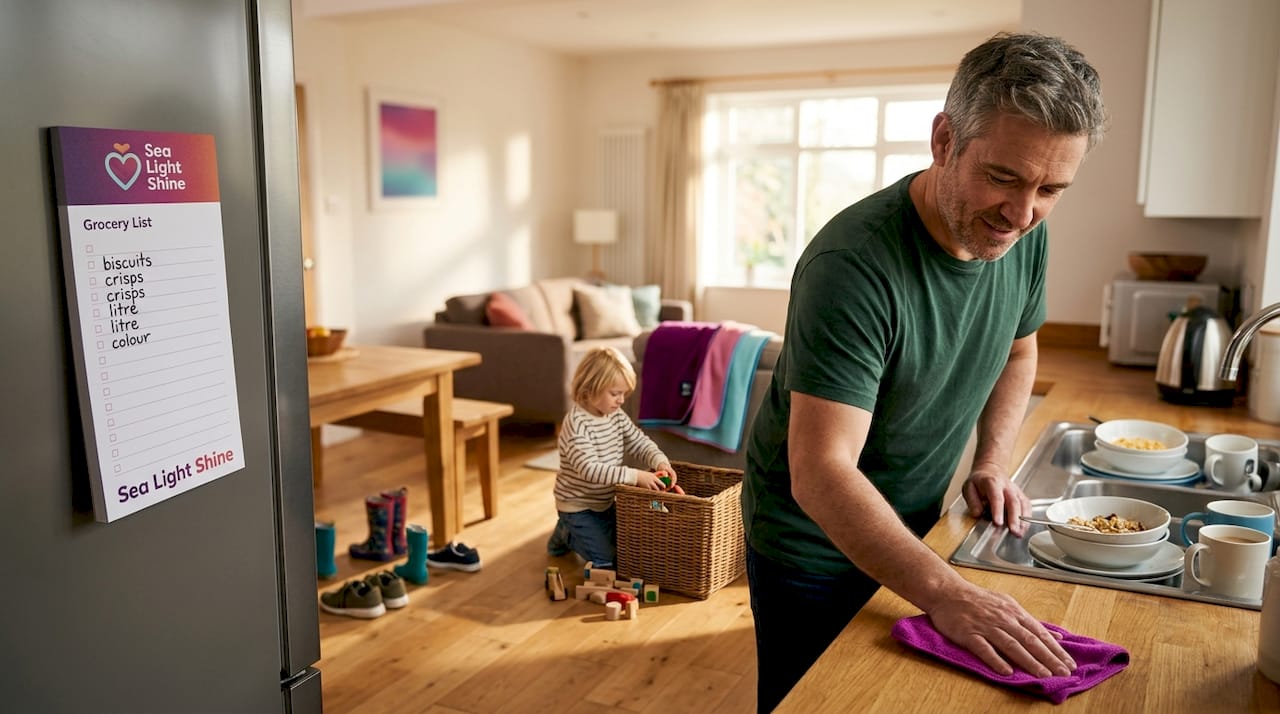
The order matters. Always work top to bottom, dry before wet. That means dusting before you wipe surfaces, and wiping surfaces before you mop or vacuum floors. This sequence stops you redistributing dirt you have already shifted.
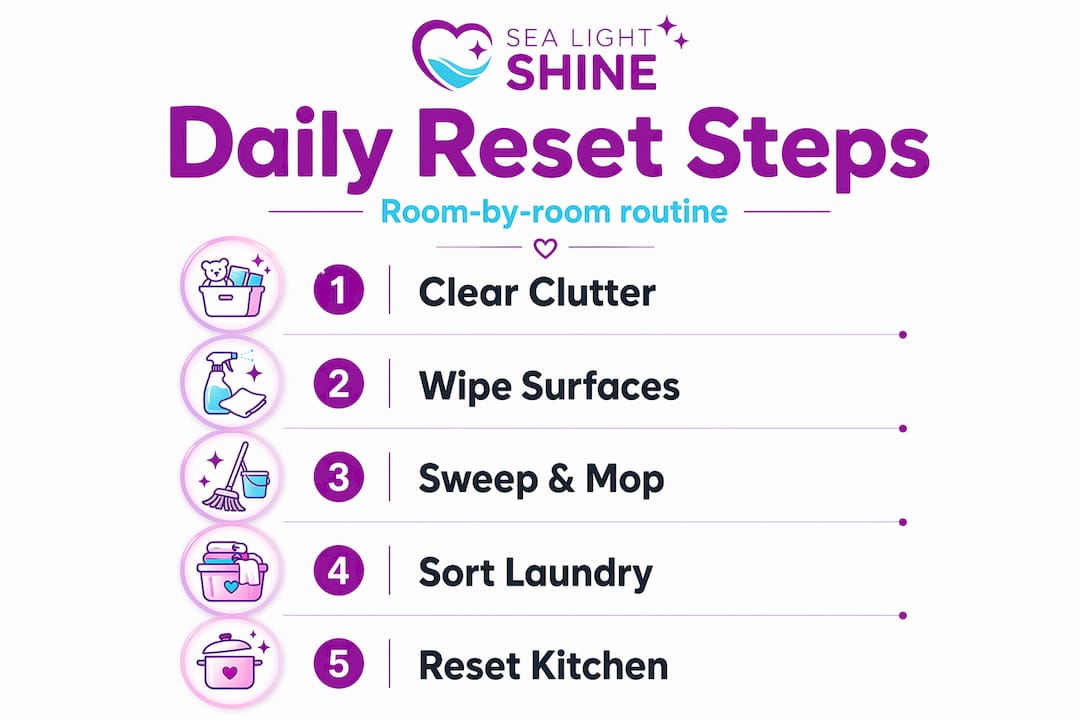
Follow these steps each day:
- Make the beds (2 minutes per room). This single task resets the visual tone of a bedroom entirely and takes under two minutes once it is habitual.
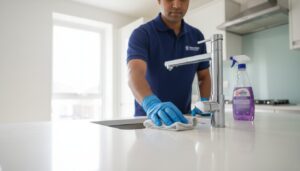
- Clear and wipe the kitchen surfaces (5 minutes). Put away anything left out, wipe the counters and hob, and stack the dishwasher or wash any overnight items.
- Sort the clutter (3 minutes). Walk through the living areas with a basket. Anything out of place goes in the basket, which you empty at the end of the reset.
- Quick bathroom wipe (3 minutes). Wipe the basin, toilet seat, and mirror. Re-hang any towels. This prevents grime building up between deeper cleans.
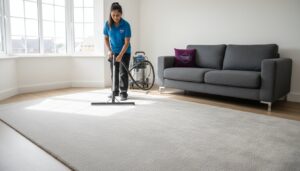
- Sweep or vacuum the kitchen and hallway floor (3 minutes). These two areas collect the most daily debris.
- Empty bins that are full (2 minutes). A full bin is a smell and hygiene risk. Do not wait for overflow.
- Put one load of laundry on or away (2 minutes of active effort). The key is keeping laundry moving rather than letting it build into a mountain.
That covers roughly 20 minutes. On busier days, cut steps 4 and 5 and focus only on the kitchen and the clutter basket. The goal is a functional home, not a pristine one.
Pro Tip: Run the dishwasher every night and empty it every morning before breakfast. It takes four minutes and means the kitchen is always at a clean baseline before the day begins.
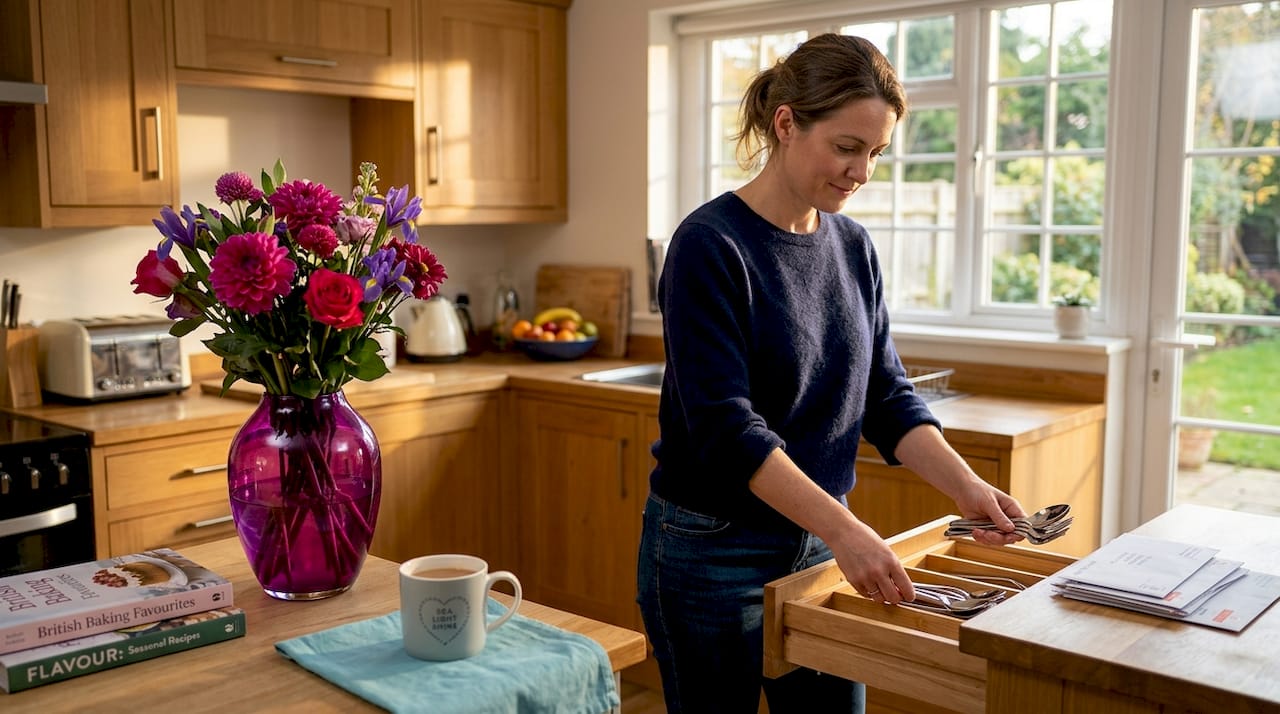
Putting items away as you use them is the single habit cleaning professionals cite most often. Sorting post as it arrives, returning kitchen utensils immediately after washing, and not leaving clothes on chairs might each save you only 90 seconds. Across a week, those seconds become the difference between a tidy home and a chaotic one.
Building a layered cleaning schedule
The daily reset covers the surface level. But if daily tasks are all you ever do, deeper dirt accumulates slowly and eventually demands a full day of cleaning. The solution is a layered system combining daily, weekly, and monthly tasks.
Here is how the three layers compare:
| Layer | Frequency | Example tasks |
|---|---|---|
| Daily reset | Every day | Wipe surfaces, clear clutter, sweep floors, make beds |
| Weekly rotation | Once per week | Vacuum all rooms, mop floors, clean bathroom thoroughly, change bedding |
| Monthly focus | Once per month | Declutter one area, deep clean oven or fridge, clean windows, sort wardrobes |
The weekly rotation works best when you assign tasks to specific days rather than deciding each week what needs doing. Monday for vacuuming, Wednesday for bathrooms, Friday for bedding. This removes the decision-making entirely, which is where most routines stall.
Monthly tasks should target one area at a time rather than attempting a full home overhaul. January means the kitchen cupboards. February means the bathroom storage. This approach means clutter is managed as a continuous, small effort rather than an occasional crisis.
A layered schedule also makes it far easier to involve other household members. When tasks are predictable and assigned, there is no ambiguity about who does what or when. For families, this is the difference between a system that works and one that relies entirely on one person.
You can find a detailed home cleaning checklist that maps these layers clearly if you want a ready-made template to start from.
Common mistakes that derail cleaning routines
Most cleaning routines do not fail because people are lazy. They fail because the routine was poorly designed to begin with. Here are the most common pitfalls, and how to avoid them.
Trying to do too much at once. Starting a routine that includes 45 tasks means missing three of them on a busy Tuesday. That leads to guilt, which leads to abandoning the routine entirely. Start with five daily non-negotiables and add from there.
Chasing perfection. Consistent daily habits beat occasional perfection every time. A bathroom wiped quickly every day stays cleaner than one scrubbed thoroughly once a fortnight.
Not using a timer. Setting a timer and stopping when it ends is what separates sustainable cleaning from open-ended drudgery. Fifteen minutes of focused effort is manageable. “I’ll clean until it’s done” is not.
Here are the quick fixes that make the most difference:
- Keep a donation box in a cupboard and drop in anything you no longer use. When the box is full, it goes.
- Assign every member of the household one daily task. Even young children can clear their own plates or tidy their room floor.
- Do a one-minute tidy before you sit down each evening. Cushions straight, surfaces clear, shoes away. This tiny habit resets the room and means morning does not start in chaos.
Pro Tip: If a task takes less than two minutes, do it immediately. This rule, borrowed from productivity methods, is equally powerful in home maintenance. Wiping a spill now takes 30 seconds. Scrubbing dried-on spill tomorrow takes five minutes.
You can also review your domestic cleaning frequency to understand which tasks actually need doing daily versus those you might be over-cleaning out of habit.
My honest take on daily cleaning
I will be upfront. When I first tried to build a daily cleaning routine, I over-engineered it completely. I had a colour-coded spreadsheet, a task for every 15-minute block, and a detailed product list. I kept it up for exactly nine days.
What actually worked was far simpler. I picked five things I would do every single day without exception: make the bed, clear the kitchen surfaces, sort the post, quick bathroom wipe, and empty the laundry basket. That was it. Everything else was optional.
Within two weeks, the house felt noticeably different. Not because I was doing more cleaning, but because I had stopped letting small messes compound. The key mindset shift was accepting “good enough for today.” A wiped surface that is not gleaming is still better than a surface that has not been touched.
I have also seen that building momentum by completing one task fully before starting the next makes a real difference for motivation. Finishing something, even something small, gives you the push to start the next thing. That is not a personality quirk. That is just how habits form.
The other thing I would tell anyone starting out: involve your household from day one. Routines that rest on one person burn that person out. Even distributing three small tasks across a family of four reduces the mental load dramatically.
— Kate
When to call in professional support

Even the best daily routine has limits. Grout build-up, carpet staining, and seasonal deep cleans are not tasks that a 20-minute daily reset will address. That is where a professional service adds genuine value, not as a replacement for your habits, but as periodic support that keeps your home at a standard your daily routine cannot reach alone.
Sealightshine provides professional deep cleaning services across East Anglia, designed to complement the kind of daily upkeep this guide covers. Whether you need a thorough pre-tenancy clean, a post-renovation refresh, or a seasonal deep clean for your home, the team brings the tools and experience to do the job properly. For high-traffic flooring and specialist areas, Sealightshine also offers professional floor cleaning that handles what daily sweeping cannot. Explore the full range of services at sealightshine.co.uk.
Common questions
How long should a daily cleaning routine take?
A well-structured daily reset takes 20 to 30 minutes and covers the kitchen, living areas, bathroom, and floors. On busy days, a focused 15-minute burst targeting the most-used spaces is enough to maintain a functional baseline.
What tasks should be done every single day?
The non-negotiable daily tasks are making beds, clearing kitchen surfaces, wiping the bathroom basin, sorting clutter, and a quick floor sweep in high-traffic areas. These five tasks take under 20 minutes and prevent mess from compounding.
How do I keep my home clean with a busy family?
Assign one small daily task to each household member and use a simple layered schedule with fixed weekly days for deeper tasks. Predictability removes the friction of deciding who does what.
Is daily cleaning better than weekly deep cleans?
Yes. Consistent daily habits maintain a cleaner home with less total effort than relying solely on weekly or occasional deep cleans, which require far more time and energy to undo accumulated mess.
When should I consider a professional cleaning service?
Professional cleaning is most useful for seasonal deep cleans, post-renovation tidying, or tackling areas like grout, carpets, and ovens that daily routines cannot address adequately. It works best as a supplement to your existing daily habits, not a replacement for them.