
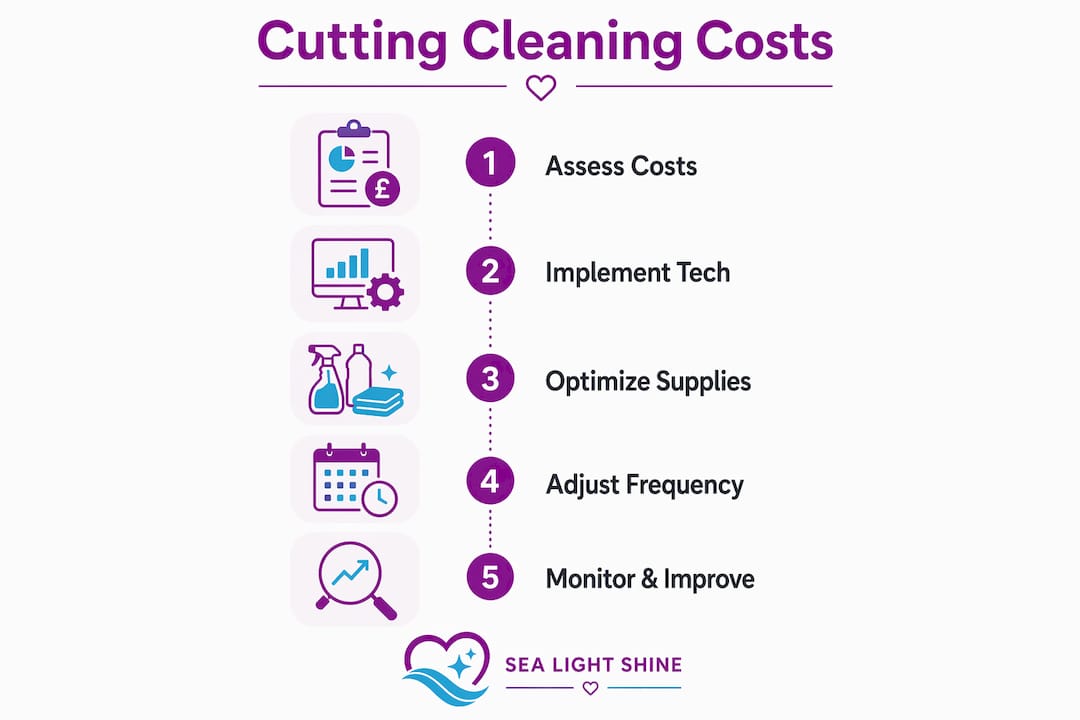
Reducing cleaning costs in an office building is achievable through strategic labour management, predictive cleaning technology, and optimised supply purchasing. The term used across the facilities management industry is “cleaning programme optimisation,” and it covers everything from contract renegotiation to chemical dosing systems. Labour typically accounts for 55 to 70 percent of any commercial cleaning contract, which means that is where the largest savings live. This article gives you a direct, practical framework for cutting office cleaning expenses without compromising hygiene or occupant satisfaction.
What are the primary cost drivers in office building cleaning?
Understanding where your cleaning budget goes is the first step toward reducing it. Office cleaning contracts average between £0.07 and £0.20 per square foot, with most general office spaces falling between £0.09 and £0.17. That range reflects differences in frequency, scope, and building complexity. Knowing your current rate tells you immediately whether you are overpaying relative to the market.
The four main cost drivers are:
- Labour. Staff time accounts for the majority of any cleaning contract. Overtime, high turnover, and poor scheduling all inflate this figure silently.
- Cleaning frequency and scope. Daily full-building cleans cost significantly more than targeted, zone-based programmes. Scope creep, where tasks accumulate without contract review, is a common budget leak.
- Supplies and equipment. Chemicals, paper products, and disposable tools add up quickly, particularly when dilution is not controlled or when ready-to-use products replace concentrates.
- Pricing model. Square-foot pricing suits standard office layouts but can cause overspending in complex or mixed-use buildings where labour-based or task-based models are more accurate.
Pro Tip: Ask your current contractor to break down their invoice into labour, supplies, overhead, and margin. Decomposing blended bids into these components exposes inefficiencies and gives you real leverage in contract negotiations.
Once you know which driver is inflating your costs, you can target it directly rather than making across-the-board cuts that risk hygiene standards.
How can predictive cleaning technology lower your costs?
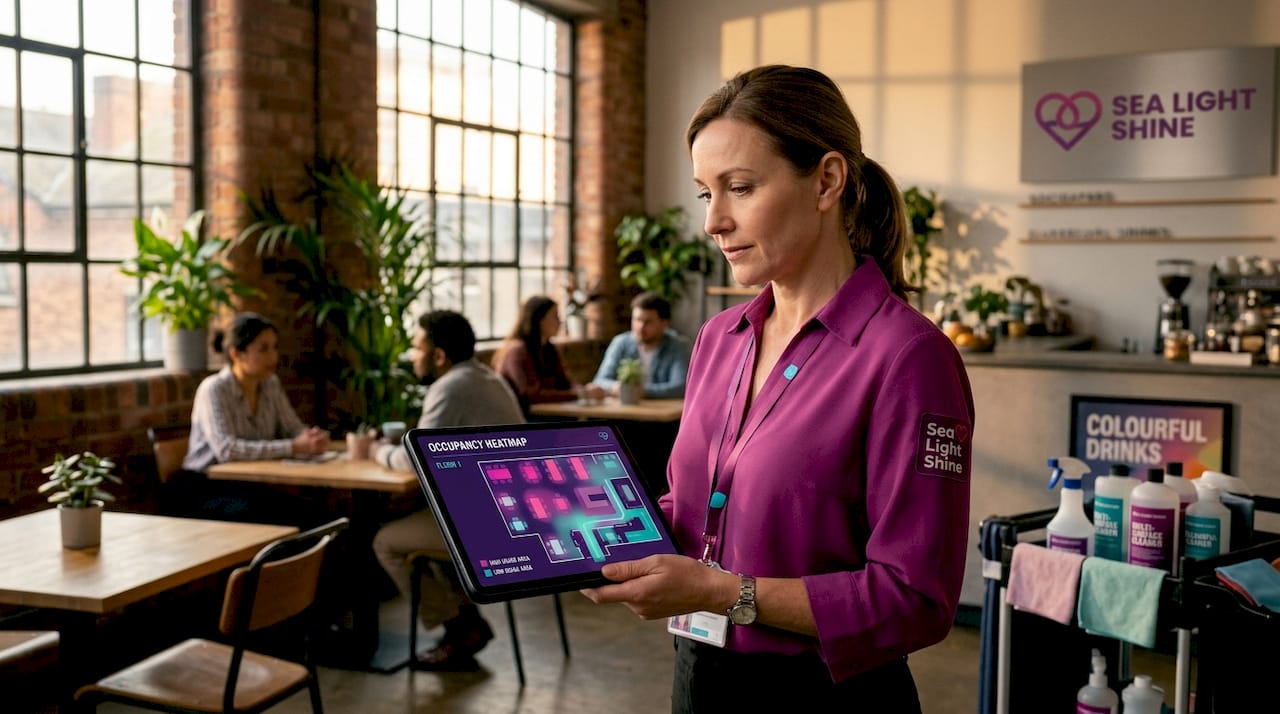
Predictive cleaning, sometimes called usage-based or AI-directed cleaning, allocates staff based on real-time space occupancy rather than fixed daily schedules. Sensors, footfall counters, and occupancy data tell cleaning teams which areas actually need attention at any given time. AI-directed cleaning can reduce cleaning costs by approximately 15 to 20 percent. That figure represents a substantial saving on a mid-sized office building with a £60,000 annual cleaning contract.
The contrast with traditional scheduling is stark:
| Approach | Basis for deployment | Typical outcome |
|---|---|---|
| Fixed-schedule cleaning | Calendar (daily or weekly) | Labour deployed regardless of actual usage |
| Predictive/usage-based cleaning | Real-time occupancy data | Labour deployed only where and when needed |
| Zone-based hybrid | High-touch area priority | Moderate savings with lower technology investment |
The case for predictive technology extends beyond cleaning. A 2-million-square-foot commercial portfolio using predictive maintenance technology saved £1.44 million annually and reduced reactive costs by 38 percent. The principle transfers directly to cleaning operations.
Implementing predictive cleaning does require planning. Technology adoption works best when treated as an operational initiative with defined success metrics, not simply an IT project. A sensible approach is to pilot the system in one floor or zone for three to six months, measure labour hours saved against baseline, and build the business case before scaling. Expect a 12 to 18 month ROI timeline. The most common barrier is resistance from cleaning staff and supervisors who are accustomed to fixed routines. Address this through early involvement and clear communication about how the data will be used.
Pro Tip: When piloting predictive cleaning, pair occupancy sensors with a structured cleaning schedule so you have a documented baseline to measure savings against.
What supply management strategies cut costs without compromising quality?
Supply costs are the second most controllable variable in your cleaning budget, and most buildings overspend here through poor purchasing decisions rather than high usage. 82 percent of contractors reported rising supply and operational costs in 2026. That pressure passes directly to you unless you take active steps to manage it.
Here are the most effective supply management strategies, ranked by impact:
- Switch to chemical concentrates. Buying concentrated cleaning solutions instead of ready-to-use products can reduce supply costs by up to 98 percent. A ready-to-use bottle costs approximately £3.20; the equivalent concentrate costs around £0.06 per use. You are largely paying for water in pre-diluted products.
- Install chemical dosing systems. Proportioning dispensers attach to your water supply and mix concentrate at the correct ratio automatically. This eliminates both over-dosing (waste) and under-dosing (ineffective cleaning that leads to rework).
- Replace disposable tools with durable alternatives. Microfibre cloths outperform disposable paper wipes on most surfaces and last through hundreds of washes. The upfront cost is higher, but the per-use cost drops sharply within weeks.
- Buy in bulk with controlled storage. Bulk purchasing reduces unit cost, but only if storage is managed properly. Unlocked supply cupboards lead to pilferage and over-use. A locked, monitored store with a sign-out log pays for itself quickly.
- Use entrance matting. High-quality matting at building entrances captures soil before it spreads across floors. Studies from the flooring industry show that effective matting can reduce the volume of dirt tracked into a building by up to 80 percent, directly reducing the labour needed for floor maintenance.
Contractor transparency on dilution ratios and usage is non-negotiable. Under-dosing or overusing chemicals silently inflates your supply spend even when labour costs appear stable. Require your contractor to provide monthly usage reports broken down by product and area.
How does cleaning frequency affect your overall budget?
The instinct when cutting costs is to reduce cleaning visits. This is often the wrong move. Frequent routine cleaning prevents the build-up that triggers expensive reactive deep cleans. A building cleaned thoroughly three times per week typically costs less per year than one cleaned once a week followed by quarterly deep cleans to reset accumulated grime.
The table below illustrates the trade-off:
| Cleaning frequency | Routine cost | Deep clean frequency | Estimated annual cost |
|---|---|---|---|
| Daily light clean | Higher per visit | Rarely needed | Lower overall |
| 3x weekly moderate | Moderate | Quarterly | Moderate overall |
| Weekly full clean | Lower per visit | Monthly | Higher overall |
The key is identifying your high-touch zones and protecting them with targeted top-up cleans. Reception desks, lift buttons, kitchen surfaces, and shared meeting rooms accumulate bacteria and visible soiling faster than open-plan desks. Focusing cleaning effort on these areas between full visits keeps the building presentable and hygienic without adding significant cost.
When reviewing your contract scope, consider the following:
- Audit every task in your current scope of work and assign a frequency. Remove tasks that are duplicated or unnecessary.
- Separate daily maintenance tasks from periodic tasks such as carpet extraction or window cleaning, and price them independently.
- Negotiate a labour-based contract if your building has variable occupancy. Paying for hours worked rather than square footage avoids overpaying during low-occupancy periods.
- Review your contract checklist annually. Scope creep is the single most common cause of unexplained cost increases in long-term cleaning contracts.
Preventing overtime and emergency cleans through consistent routine scheduling also reduces variable labour costs. A missed clean that requires a double-effort visit the following day costs more than two standard visits.
What mistakes undermine cleaning cost reduction efforts?
Budget-friendly office cleaning fails most often not because the strategy is wrong, but because of predictable execution errors. Recognising these in advance saves you from expensive corrections.
- Chasing the lowest price. The cheapest contractor rarely delivers the lowest total cost. Poor quality generates rework, complaints, and eventually a contract change. Cleaning outcomes such as infection prevention and occupant satisfaction must remain the measure of success, not the invoice total.
- Cutting labour hours too aggressively. Reducing hours below the threshold needed to complete the scope creates a backlog. That backlog becomes a deep clean. Deep cleans cost more per hour than routine visits and are disruptive to building occupants.
- Ignoring chemical dilution. Hidden supply cost inflation through improper dilution is one of the least visible budget leaks in commercial cleaning. Require your contractor to document and audit dilution ratios quarterly.
- Skipping staff training. Untrained cleaning staff use more product, take longer per task, and miss high-touch areas. Investment in training pays back within weeks through reduced supply usage and fewer complaints.
- Dismissing technology ROI delays. Predictive cleaning systems do not pay back immediately. Abandoning a pilot after two months because savings are not yet visible is a common and costly mistake.
“The goal is not to spend less on cleaning. The goal is to spend correctly on cleaning. Those two things produce very different buildings.”
Key takeaways
Reducing cleaning costs in an office building requires targeting labour efficiency, supply purchasing, and contract scope simultaneously rather than cutting any single line item in isolation.
| Point | Details |
|---|---|
| Labour is the largest cost driver | Focus contract negotiations on hours, scheduling, and overtime controls first. |
| Predictive cleaning saves 15 to 20 percent | Pilot AI-directed scheduling in one zone before committing to full deployment. |
| Concentrates cut supply costs dramatically | Switching from ready-to-use products to concentrates can reduce spend by up to 98 percent. |
| Frequency reduces deep clean costs | Routine top-up cleans in high-touch zones prevent expensive reactive deep cleans. |
| Contract scope drives hidden costs | Audit your scope of work annually and separate routine from periodic tasks. |
What I have learned from working with office cleaning budgets
The most common mistake I see property managers make is treating cleaning as a commodity purchase. They put the contract out to tender, pick the lowest bid, and then wonder why standards slip within three months. The problem is not the contractor. It is the absence of a clear, measurable scope of work and any mechanism to hold the contractor accountable.
The buildings where I have seen the most sustained cost reductions are the ones where the property manager treats the cleaning contractor as a partner rather than a supplier. They share occupancy data, review task lists quarterly, and ask for usage reports on chemicals. That transparency creates a working relationship where the contractor can flag inefficiencies rather than quietly absorbing them into the next price increase.
Predictive cleaning is genuinely exciting, but it is not a shortcut. The property managers who get the best results from it are the ones who invest time in the pilot phase, measure carefully, and build the business case before scaling. Those who buy the technology and expect it to run itself are usually disappointed.
My honest advice: start with your contract scope and your supply purchasing before you invest in any technology. Those two areas alone can reduce your annual cleaning spend by 15 to 25 percent with no capital outlay. Once you have that baseline under control, technology becomes a multiplier rather than a rescue plan.
— Kate
How Sealightshine can help you cut cleaning costs
Sealightshine was built specifically to solve the problems that cost commercial property managers money: unreliable contractors, inconsistent service, and opaque pricing. Every commercial cleaning contract includes a detailed scope of work, transparent supply usage reporting, and a service structure designed around your building’s actual occupancy patterns rather than a one-size-fits-all schedule. If your current cleaning programme is costing more than it should, or delivering less than it promises, Sealightshine’s office cleaning service gives you a straightforward, accountable alternative across East Anglia. Get in touch to discuss your building’s requirements and receive a clear, itemised quote.
FAQ
What is the average cost of office cleaning per square foot?
General office cleaning typically costs between £0.09 and £0.17 per square foot, depending on cleaning frequency, building complexity, and location. Use this range as a benchmark when reviewing or renegotiating your current contract.
How much can predictive cleaning technology reduce costs?
AI-directed, usage-based cleaning can reduce cleaning costs by approximately 15 to 20 percent by deploying staff only where and when spaces are actually used. Expect a 12 to 18 month timeline before the investment fully pays back.
Is it cheaper to clean more frequently or less frequently?
More frequent routine cleaning is typically cheaper overall because it prevents the build-up that requires expensive deep cleans. Reducing visit frequency to save money often increases annual spend through reactive and periodic cleaning costs.
What is the fastest way to reduce supply costs in a cleaning contract?
Switching from ready-to-use cleaning products to chemical concentrates is the single fastest supply cost reduction available, with potential savings of up to 98 percent per unit. Pair this with a chemical dosing system to control dilution and eliminate waste.
What should I include in a cleaning contract to control costs?
A well-structured contract should include a detailed task list with assigned frequencies, separate line items for routine and periodic cleaning, chemical usage reporting requirements, and a review clause. A thorough commercial cleaning contract protects you from scope creep and unexplained price increases.