Moving out of a rented property in East Anglia is stressful enough without discovering your deposit is at risk over cleaning. Understanding what is a move-out cleaning service, and what it genuinely involves, can mean the difference between a full refund and a costly dispute. Many tenants assume a quick hoover and wipe-down will suffice, but professional cleaning standards require returning the property to its original inventory condition. This guide clarifies exactly what the service involves, what the law says, and how to approach your final clean with confidence.
Table of Contents
- What is a move-out cleaning service?
- Why move-out cleaning is essential for deposit protection
- Understanding the legal and practical cleaning standards
- How to prepare and perform an effective move-out clean
- Do it yourself or hire professionals? Weighing the options
- Why understanding standards and documentation matters more than spending on cleaning
- Professional move-out cleaning services tailored for East Anglia homes
- Frequently asked questions
Key Takeaways
| Point | Details |
|---|---|
| Move-out cleaning defined | It is a detailed deep-clean to restore the property to its original inventory condition before tenancy. |
| Deposit disputes cause | Over half of deposit disputes in the UK relate to inadequate cleaning at move-out inspections. |
| Legal cleaning standards | Tenants must return properties to the same condition as move-in, considering fair wear and tear, without mandatory professional cleans. |
| Documentation is vital | Photos, videos, and documented inspections provide the strongest defence against deposit deductions. |
| DIY vs professional | Choosing between DIY and professional cleaning depends on your time, budget, and the inventory baseline. |
What is a move-out cleaning service?
A move-out cleaning service is a specialised deep clean carried out on an empty property before it is handed back to the landlord or letting agent. It is fundamentally different from the weekly tidy you do while living somewhere. Where regular domestic cleaning maintains a liveable standard, a move-out clean restores the property to its documented condition at the start of your tenancy.
Move-out cleaning tasks like cleaning inside ovens, removing limescale from taps and shower screens, and deep-cleaning carpets go well beyond anything a standard clean covers. These are the precise areas landlords and agents inspect most closely, and the areas most commonly flagged in deposit disputes.
The scale of the work surprises many people. A two-bedroom flat typically requires five to eight hours of focused cleaning when done properly. That is not a job you can squeeze in on a Sunday evening before handing the keys back Monday morning.
Typical costs for move-out cleaning in East Anglia:
| Property size | Approximate cost |
|---|---|
| Studio or one-bedroom flat | £125 to £160 |
| Two-bedroom property | £160 to £200 |
| Three-bedroom property | £200 to £250 |
| Four-bedroom property | £250 and above |
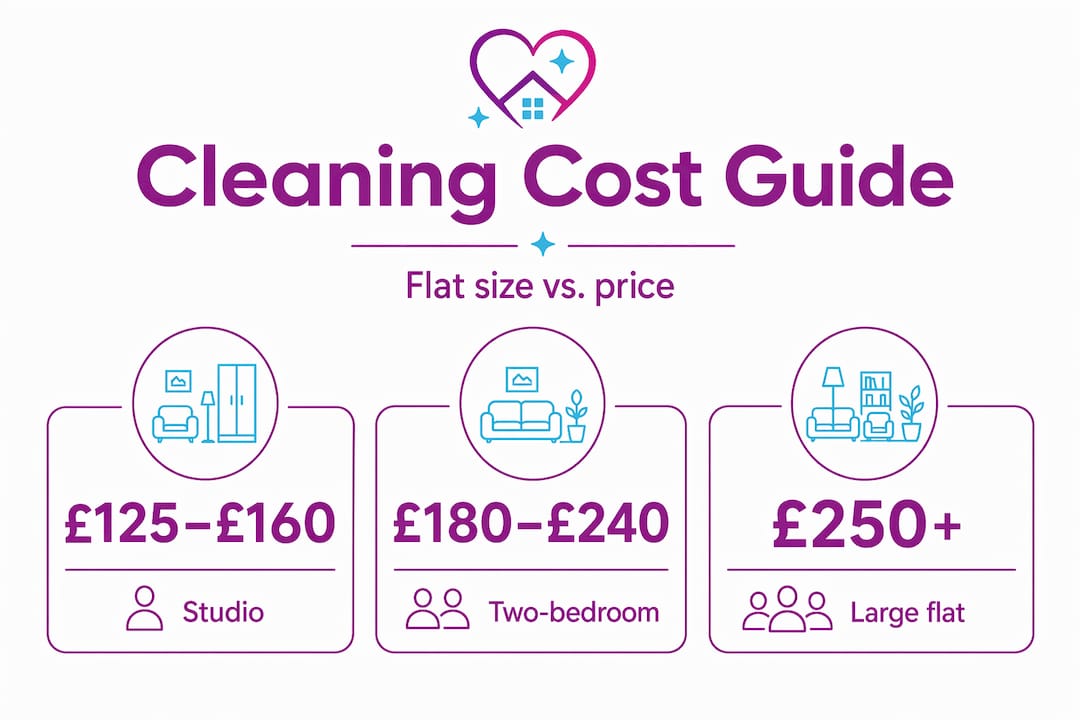
These figures vary based on property condition, specific requirements, and whether carpet cleaning or oven cleaning is included separately.
A thorough move-out cleaning service typically covers:
- Inside and outside of all kitchen appliances, including the oven, fridge, and microwave
- Limescale removal from all bathroom surfaces, taps, and shower screens
- Cleaning inside all cupboards and wardrobes
- Skirting boards, light switches, plug sockets, and door frames
- Windows cleaned from the inside, including sills and tracks
- Deep vacuuming and, where required, steam cleaning of carpets
- Removal of cobwebs from ceilings and corners
A move-out cleaning service is not about making a property look nicer than when you arrived. It is about meeting a documented standard that protects both you and the landlord during handover.
Why move-out cleaning is essential for deposit protection
The financial stakes around move-out cleaning are real and well-documented. Over 50% of deposit disputes in the UK relate directly to cleaning issues. That makes cleanliness the single biggest reason tenants lose part or all of their deposit, ahead of damage, unpaid rent, and redecoration.
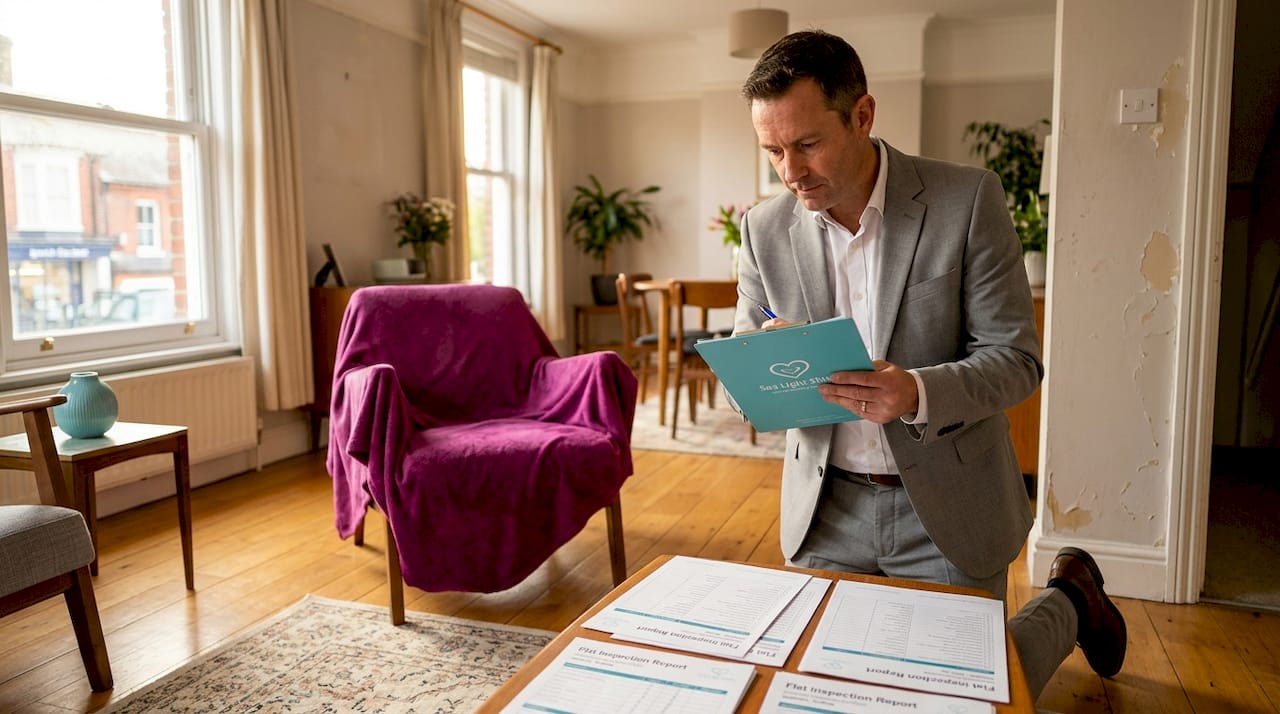
In practical terms, even a modest deposit of £1,200 on a two-bedroom flat in Ipswich or Colchester represents real money. A professional move-out clean costing £175 that secures the full return is obviously better value than losing £300 to £600 in dispute deductions.
Cleaning standards in the sector are not arbitrary. Many professional letting agents reference frameworks from bodies such as ARLA Propertymark or BICSc when assessing a property’s cleanliness at checkout. Understanding this context is important because it signals that agents are often working from structured inspection criteria, not personal preference.
Common cleaning failures that lead to deposit deductions:
- Oven interior left with grease or burnt residue
- Limescale on bathroom fittings and shower screens
- Dirty skirting boards and door frames
- Marks on walls not addressed
- Carpets not professionally cleaned where required by the inventory
- Cupboard interiors not wiped out
Taking a professional vs DIY approach to move-out cleaning is worth considering carefully before you begin. A checklist-driven, systematic clean dramatically reduces the risk of losing money over an area you simply forgot to address.
Understanding the legal and practical cleaning standards
Before you spend money on cleaning, it is worth being clear on what you are actually legally required to do. This is where many tenants either overspend or misunderstand their position entirely.
Your key document is the check-in inventory report prepared at the start of your tenancy. This records the property’s condition room by room, including photographs. Your legal obligation at the end of the tenancy is to return the property to that documented standard, not to a higher one.
The concept of fair wear and tear is important here. Normal deterioration from everyday use over a tenancy, slight scuffs on paintwork, minor carpet wear in walkways, is not your responsibility to fix. Landlords cannot charge tenants for fair wear and tear. Where disputes arise, it is often because landlords conflate wear and tear with genuine cleaning failure.
Crucially, there is no legal obligation to pay for professional cleaning. Tenants must return the property to the condition recorded in the original inventory, accounting for fair wear and tear. If the inventory shows a professionally cleaned standard at the start of your tenancy, you are expected to match that standard. If it shows a more modest baseline, your obligation is to that level.
DIY vs professional cleaning: the key differences
| Factor | DIY cleaning | Professional service |
|---|---|---|
| Cost | Lower upfront cost | £125 to £250+ depending on property |
| Time required | 8 to 15+ hours typically | 4 to 8 hours with a trained team |
| Equipment quality | Standard domestic tools | Industrial-grade machines |
| Deposit risk | Higher if areas are missed | Lower, often with re-clean guarantee |
| Legal compliance | Depends on your thoroughness | Aligned to inventory standards |
Understanding legal cleaning standards and obligations before you commit to a cleaning method will save you time and money.
Pro Tip: Take dated photographs of every room on the day you moved in, and again immediately after your final clean. This is your strongest protection if a landlord raises a cleaning dispute that is not supported by the original inventory.
How to prepare and perform an effective move-out clean
Whether you are doing the cleaning yourself or supervising a professional team, preparation makes a significant difference to the outcome.
Step-by-step approach to an effective move-out clean:
- Remove all furniture and personal belongings before starting. Cleaning around boxes or furniture leads to missed spots and incomplete results.
- Work from top to bottom in each room. Ceilings, cornices, and light fittings first. Floors and skirting boards last.
- Clean inside every cupboard, drawer, and wardrobe. These are frequently missed and consistently checked.
- Address the kitchen last. Oven cleaning is the most time-consuming task and often needs specialist products or extended dwell time.
- Tackle limescale in bathrooms systematically. Use an appropriate descaler and allow proper dwell time before wiping.
- Conduct a room-by-room walkthrough with good lighting once cleaning is complete, photographing every area.
- Check practical details: replace burnt-out bulbs, confirm smoke detectors are working, check taps and fixtures are functional.
Room-by-room areas to confirm are complete:
- Kitchen: oven interior and exterior, extractor hood filter, fridge and freezer (defrosted and cleaned), sink, tiles, and cupboards inside and out
- Bathrooms: toilet including under the rim, bath, basin, shower screen, tiles, mirror, and all chrome fittings
- Bedrooms: wardrobes inside and out, skirting boards, window sills, and carpet or floor surfaces
- Living areas: skirting boards, door frames, light switches, windows from inside, and any built-in storage
- Hallways and stairs: handrails, skirting boards, light fittings, and flooring
Using a detailed move-out cleaning checklist for Ipswich properties ensures nothing is overlooked during handover.
Pro Tip: If your agent or landlord is willing, arrange a joint final inspection before the official checkout appointment. Identifying any concerns on the day gives you the opportunity to address them rather than finding out after the fact via a deductions notice.
Do it yourself or hire professionals? Weighing the options
The decision to clean yourself or bring in professionals depends on several factors: the condition of the property, what your inventory specifies, the time you have available, and your tolerance for the risk of deposit deductions.
DIY cleaning is entirely viable for tenants who are organised, have time, and occupy a reasonably well-maintained property. It requires genuine effort and attention, but it is achievable. The risk is that DIY efforts often miss inspection-critical spots that professional cleaners are trained to address, leading to unexpected deductions.
Professional cleaners bring industrial-grade equipment that most tenants simply do not have access to. Steam cleaners, commercial descalers, and professional oven cleaning chemicals deliver results that domestic products cannot match. Many services also offer a re-clean guarantee, meaning if an agent raises a concern, the cleaners return to address it at no extra cost.
When hiring professionals makes particular sense:
- The inventory records a professionally cleaned baseline at check-in
- The property has not been deeply cleaned in some time
- You have a busy schedule and cannot dedicate the hours required
- You are concerned about specific areas such as carpets or an oven in poor condition
- The deposit value is significant and the risk of disputes is high
Understanding the benefits of hiring professional cleaners goes beyond convenience. When weighed against potential deposit deductions, professional cleaning often pays for itself.
Pro Tip: Before booking any professional cleaning service, check your inventory for the phrase “professionally cleaned” or similar wording. If it appears, a professional service is expected at check-out, and a DIY clean may not satisfy your agent regardless of the quality.
Why understanding standards and documentation matters more than spending on cleaning
Here is something most cleaning guides will not tell you: the biggest source of unresolved deposit disputes is not dirty properties. It is poor documentation. Tenants who clean thoroughly but keep no evidence are almost as vulnerable as those who do not clean properly at all.
We have seen this pattern repeatedly in East Anglia. A tenant spends a full weekend cleaning a property to a high standard, returns the keys, and then receives a deductions notice weeks later for areas they absolutely cleaned. Without dated photographs and a record of what was done, challenging those deductions is genuinely difficult.
Your strongest protection is documentation. Photographs taken in good lighting immediately after cleaning, cross-referenced against your check-in inventory, provide clear evidence of the condition you left the property in. Add cleaning receipts if you hired professionals, and a note of the checkout date and time.
Successful deposit returns consistently come down to two things: meeting the inventory standard and proving you met it. Spending more on cleaning than the inventory requires, without documenting the results, is money without protection. Understanding importance of documentation and standards is genuinely as important as the clean itself.
Do not overlook communication either. Emailing your landlord or agent to confirm the clean is complete, and requesting written acknowledgement, creates a paper trail that protects you if questions arise later.
Professional move-out cleaning services tailored for East Anglia homes
If you want the certainty of a professional result without the time and risk of doing it yourself, Sea Light Shine provides dependable move-out cleaning across East Anglia. We work with tenants, landlords, and letting agents to deliver cleans that meet the standards agents inspect against at checkout.

Our teams use industry-grade equipment and eco-friendly products, and we back every professional end of tenancy cleaning in Suffolk and wider East Anglia with a re-clean guarantee. If your agent raises a concern after we have cleaned, we return and address it at no cost to you. We also offer pre-booking consultations to align our cleaning scope with your specific inventory requirements, so nothing is left to chance. Review our detailed end of tenancy cleaning checklist for Ipswich to see exactly what is covered.
Pro Tip: Book your move-out clean at least one week before your checkout date. This gives you buffer time to address any agent feedback before the official handover, and it avoids the last-minute rush that leads to missed areas.
Frequently asked questions
Is professional move-out cleaning legally required by landlords in the UK?
No. Landlords cannot legally demand professional cleaning or require a receipt as a condition of ending a tenancy. Tenants must return the property to the cleanliness standard recorded in the original inventory, accounting for reasonable wear and tear.
How does move-out cleaning differ from regular domestic cleaning?
Move-out cleaning is a thorough deep clean covering areas like inside appliances, skirting boards, and limescale removal. End-of-tenancy cleaning covers all standard areas plus detailed work that regular domestic cleaning does not address.
When is the best time to perform the move-out cleaning?
After all furniture and belongings have been removed. Empty properties ensure no area is missed and allow every surface to be properly accessed and cleaned before the inspection.
Can tenants clean the property themselves or must they hire professionals?
Tenants are free to clean themselves. Under the Tenant Fees Act 2019, landlords cannot force tenants to use a professional service or require receipts, provided the property meets the cleanliness standard set out in the check-in inventory.
What documentation should tenants keep to protect their deposit?
Keep dated photographs, videos, and any cleaning receipts. Photos and joint sign-off from a final walkthrough with your landlord or agent provide the clearest protection against unfair cleaning deductions.
Recommended
- End of Tenancy Cleaning Quotes Chelmsford: Your 2026 Guide to a Pristine Move-Out – Sealightshine
- End of Tenancy Cleaning Ipswich: The Definitive 2026 Guide to Securing Your Deposit – Sealightshine
- How to Master Your Tenancy Deposit Cleaning in Ipswich: A 2026 Step-by-Step Guide – Sealightshine
- End of Tenancy Cleaning for Students in Colchester: The 2026 Deposit-Saving Checklist – Sealightshine